
Protein Rich Indian Diet Protein is an essential nutrient required for muscle, bone, enzymes, hormones, immune function and tissue repair. Yet protein intake is frequently misunderstood. Some people consume too little, while others assume that very high protein intake is automatically healthier.
For most people, the better approach is straightforward: meet your protein requirement through a balanced diet, distribute protein across meals, and adjust intake according to age, activity, body size and medical conditions.
The ICMR–National Institute of Nutrition (NIN) Dietary Guidelines for Indians 2024 emphasize obtaining protein from a balanced diet and caution against excessive use of protein supplements. The guidelines also note that protein needs can generally be met through appropriately planned vegetarian or non-vegetarian diets. ICMR National Institute of Nutrition
Why Does Your Body Need Protein?
Protein is made up of amino acids that are used to build and maintain body tissues.
Adequate protein supports:
- Muscle mass and strength
- Tissue repair and recovery
- Enzymes and hormones
- Immune function
- Bone and connective-tissue health
- Maintenance of lean body mass during weight loss
- Recovery from illness, surgery and injury
Protein is therefore important throughout life—not only for people who exercise.
How Much Protein Do You Need?
There is no single protein target that is ideal for everyone.
Protein requirements depend on:
- Age
- Body weight
- Physical activity
- Pregnancy or lactation
- Muscle-building goals
- Energy intake
- Acute or chronic illness
- Kidney function
- Nutritional status
For healthy adults, the commonly used reference requirement is around 0.8 g/kg/day, while older adults generally require more to help preserve muscle and physical function.
For healthy older adults, expert groups including ESPEN and the PROT-AGE Study Group generally recommend approximately 1.0–1.2 g/kg/day. PubMed
Practical protein guide
| Person / situation | Approximate protein target |
|---|---|
| Healthy adult | Around 0.8 g/kg/day as a reference level |
| Physically active adult | Often around 1.0–1.2 g/kg/day, depending on activity and goals |
| Healthy older adult | 1.0–1.2 g/kg/day |
| Older adult with illness or malnutrition risk | Often 1.2–1.5 g/kg/day, individualized |
| Resistance-trained individuals | Requirement depends on training, total diet and goals |
| Kidney disease | Individualize—do not automatically increase protein |
| Pregnancy/lactation | Increased requirements; individualized planning is appropriate |
The older-adult recommendations are supported by evidence summarized by ESPEN and the PROT-AGE group. PubMed
These figures are starting points, not universal prescriptions.
An Easy Way to Calculate Your Protein Requirement
For a healthy adult:
Protein requirement = body weight (kg) × protein target (g/kg/day)
Example
A 60-kg healthy adult using a reference target of 0.8 g/kg/day:
60 × 0.8 = 48 g protein/day
An older adult weighing 60 kg using 1.0–1.2 g/kg/day:
60 × 1.0–1.2 = 60–72 g/day
For people with obesity, significant fluid retention, amputation, severe illness or altered body composition, the choice of body weight for calculation may need professional assessment.
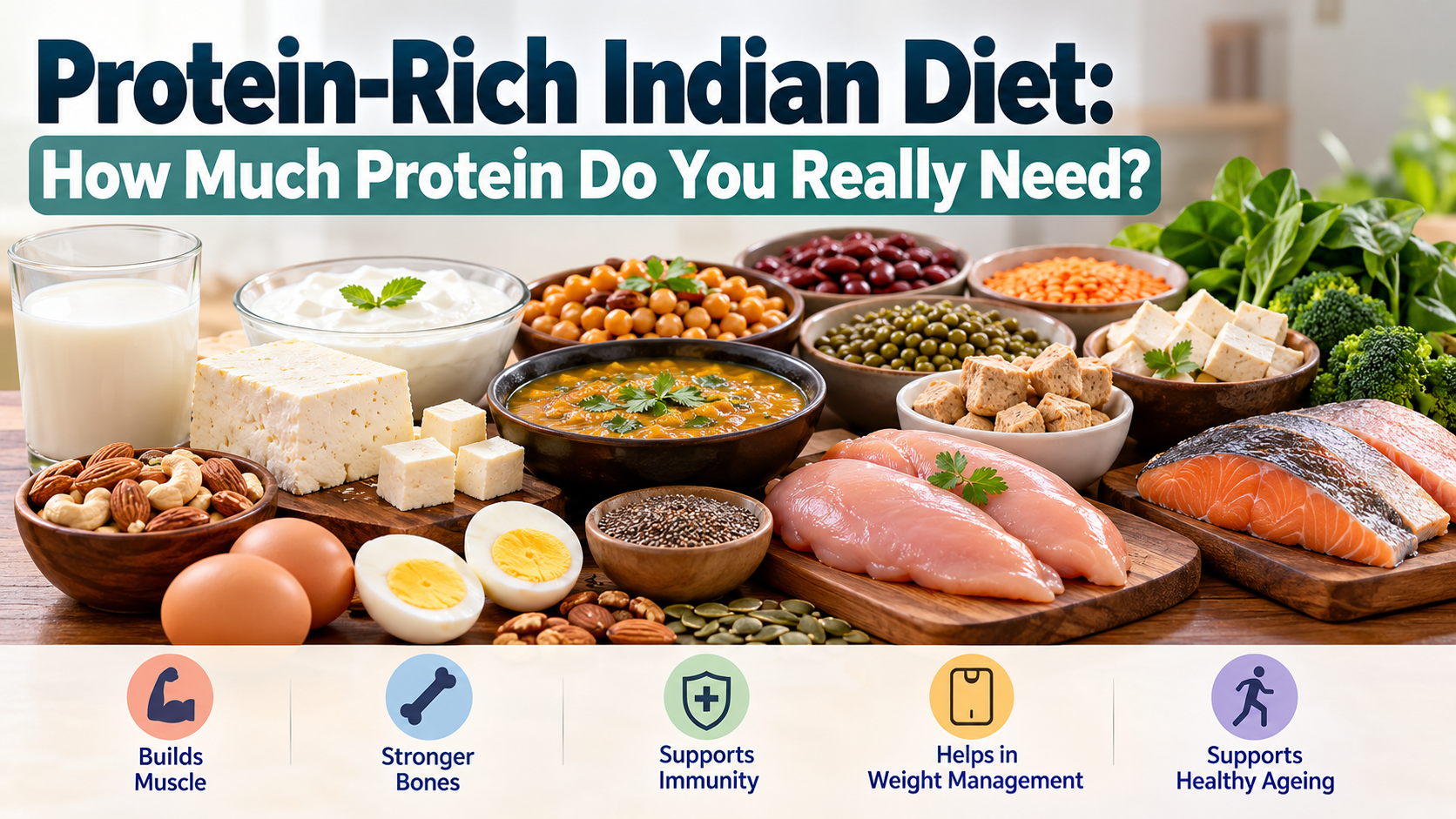
Protein-Rich Indian Foods
India has a wide range of protein-containing foods, including both vegetarian and non-vegetarian options.
Vegetarian sources
Pulses and dals
- Moong dal
- Masoor dal
- Arhar/toor dal
- Chana dal
- Urad dal
Legumes
- Chickpeas/chana
- Rajma
- Black-eyed peas/lobia
- Green peas
- Other beans
Soy foods
- Soybeans
- Tofu
- Soy chunks
Dairy
- Milk
- Curd/dahi
- Greek-style or strained curd
- Paneer
Nuts and seeds
- Peanuts
- Almonds
- Walnuts
- Sesame
- Pumpkin seeds
- Flaxseed
- Chia seeds
These foods provide protein along with varying amounts of fiber, minerals and other nutrients.
Non-Vegetarian Protein Sources
Appropriate options include:
- Eggs
- Fish
- Chicken
- Lean meat
Fish can additionally provide important nutrients including omega-3 fatty acids, depending on the species.
For overall health, preparation matters. Grilled, baked, steamed or lightly cooked options generally make it easier to control added fat compared with heavily fried preparations.
How Much Protein Is in Common Indian Foods?
Protein content varies according to portion size, recipe and preparation. The following are approximate values, useful for meal planning rather than laboratory-level calculations.
| Food | Typical portion | Approx. protein |
|---|---|---|
| Milk | 250 mL | ~8 g |
| Curd | 200 g | ~7–10 g |
| Paneer | 100 g | ~18–20 g |
| Cooked dal | 1 cup | ~8–10 g |
| Cooked chickpeas | 1 cup | ~14–15 g |
| Cooked rajma | 1 cup | ~13–15 g |
| Soy chunks, dry | 50 g | ~25 g |
| Tofu | 100 g | ~8–15 g |
| Egg | 1 large | ~6–7 g |
| Chicken, cooked | 100 g | ~25–30 g |
| Fish, cooked | 100 g | ~20–25 g |
| Peanuts | 30 g | ~7–8 g |
Actual values vary by brand, food variety, cooking method and portion size.
Can Vegetarians Get Enough Protein?
Yes.
A well-planned vegetarian Indian diet can provide adequate protein.
The ICMR-NIN Dietary Guidelines 2024 specifically demonstrate that appropriately planned vegetarian diets can meet essential amino-acid requirements. They also describe combining cereals and pulses as one way of improving protein quality. ICMR National Institute of Nutrition
Useful combinations include:
- Rice + dal
- Roti + dal
- Khichdi + curd
- Roti + chana
- Rice + rajma
- Dal + vegetables + curd
- Idli/dosa + sambar
- Roti + paneer
- Soy/tofu + cereals
The important point is not that every meal must contain a perfect amino-acid combination. Overall dietary adequacy across the day matters.
Protein and Indian Vegetarian Diets
A common mistake is to think that a vegetarian diet automatically means a low-protein diet.
The actual protein intake depends on what replaces meat or eggs.
A vegetarian diet based mainly on:
- Refined cereals
- Sugary foods
- Fried snacks
- Biscuits
- Low-protein meals
may be protein-poor.
In contrast, a vegetarian diet containing:
dal + beans + soy + dairy + nuts/seeds + whole grains
can provide substantial protein.
Should Protein Be Distributed Across the Day?
Rather than consuming most of the day’s protein at dinner, distributing protein across meals can be a practical strategy, particularly for older adults.
Recent research in older adults found that breakfast often provided the least protein, while dinner provided the most. The authors suggested that increasing protein at breakfast and improving the absolute amount of protein per meal may help optimize protein intake. PubMed
A practical pattern could therefore be:
Breakfast → protein-containing food
Lunch → dal/beans + other protein
Snack → curd/milk/appropriate protein source
Dinner → dal/paneer/tofu/egg/fish/chicken as appropriate
The exact quantity should be individualized.
Protein and Weight Loss
Protein can be useful during weight management because adequate protein helps preserve lean mass while calorie intake is reduced.
However:
A high-protein diet is not automatically a weight-loss diet.
Total calorie intake, food quality, physical activity, sleep and adherence remain important.
A healthy weight-loss diet should contain adequate protein while also providing:
- Vegetables
- Appropriate fruit
- Whole grains
- Pulses
- Healthy fats
- Adequate micronutrients
Increasing protein while simultaneously consuming excessive calories will not necessarily result in weight loss.
Protein and Muscle Building
Resistance exercise provides an important stimulus for muscle adaptation.
Protein and resistance training work together:
Resistance exercise → muscle stimulus
Adequate protein → amino acids for muscle protein synthesis
For people exercising regularly, protein requirements may be higher than the basic adult reference intake.
However, the ICMR-NIN 2024 guidelines caution against assuming that increasingly large amounts of protein will produce increasingly large gains. They note that research suggests protein intake above approximately 1.6 g/kg/day does not provide additional muscle-mass benefit from prolonged resistance training in healthy adults. ICMR National Institute of Nutrition
Therefore, more is not necessarily better.
Do You Need Protein Powder?
Not necessarily.
Most people can obtain adequate protein from ordinary foods when the diet is appropriately planned.
ICMR-NIN’s 2024 Dietary Guidelines specifically state that consuming high levels of protein, particularly through protein supplement powders, is not advisable as a general practice. The guidelines also note that people with pre-existing kidney disease should take particular care with high-protein diets. ICMR National Institute of Nutrition
Protein supplements may have a role in selected situations—for example, when dietary intake is inadequate or when a clinician/dietitian has identified a specific nutritional requirement.
They should not be viewed as a substitute for a balanced diet.
Is High Protein Safe for Everyone?
No.
Protein requirements must be individualized in certain medical conditions.
Particular caution is needed in people with:
- Chronic kidney disease
- Significant liver disease
- Certain metabolic disorders
- Frailty or malnutrition
- Acute illness
- Severe gastrointestinal disease
People with kidney disease should not start a high-protein diet simply because protein is promoted for weight loss or muscle gain.
The appropriate amount depends on kidney function, nutritional status, disease stage and treatment plan.
ICMR-NIN specifically cautions that high protein intake may worsen renal function in people who already have kidney disease. ICMR National Institute of Nutrition
Protein and Diabetes
Protein can be an important component of a diabetes-friendly diet.
Protein-rich foods may help improve meal satiety and can reduce the proportion of a meal coming from refined carbohydrates.
However, not all protein foods are metabolically equivalent.
For example:
Better choices may include:
- Dal
- Beans
- Soy
- Tofu
- Unsweetened curd
- Eggs
- Fish
- Lean poultry
- Nuts and seeds in appropriate portions
It is also important to consider the carbohydrate and calorie content of the entire meal.
A “high-protein” packaged food can still contain substantial added sugar, refined carbohydrate or calories.
Protein and Fatty Liver
For people with metabolic dysfunction-associated steatotic liver disease (MASLD), protein should generally be considered as part of the overall dietary pattern, rather than as a reason to consume excessive quantities of meat or supplements.
The overall goals usually include:
- Appropriate calorie intake
- Weight management when indicated
- Adequate protein
- More minimally processed foods
- Adequate vegetables and fiber
- Reduced excess sugar and refined foods
- Appropriate physical activity
The quality of the overall diet matters more than simply maximizing protein.
Common Protein Mistakes
Mistake 1: “More protein is always better.”
It isn’t.
Protein needs have a range, and excessive intake can be inappropriate, particularly in some medical conditions.
Mistake 2: Depending mainly on protein powder
Protein powder is a supplement, not a requirement for a healthy diet.
Mistake 3: Eating very little protein during weight loss
Aggressive calorie restriction without adequate protein and resistance exercise can contribute to loss of lean mass.
Mistake 4: Ignoring protein at breakfast
Many Indian breakfasts are dominated by refined carbohydrates.
Examples include:
- Tea + biscuits
- Poha alone
- Bread + jam
- Plain paratha
- Sugary breakfast cereals
These can be improved by adding an appropriate protein source.
Examples:
Poha + curd
Vegetable upma + curd
Besan chilla + curd
Idli + sambar
Egg + whole-grain roti
Paneer/tofu + vegetables
Mistake 5: Assuming vegetarian food is automatically low protein
A well-planned vegetarian diet can provide adequate protein.
Mistake 6: Ignoring kidney function
A high-protein diet should not be prescribed blindly to someone with kidney disease.
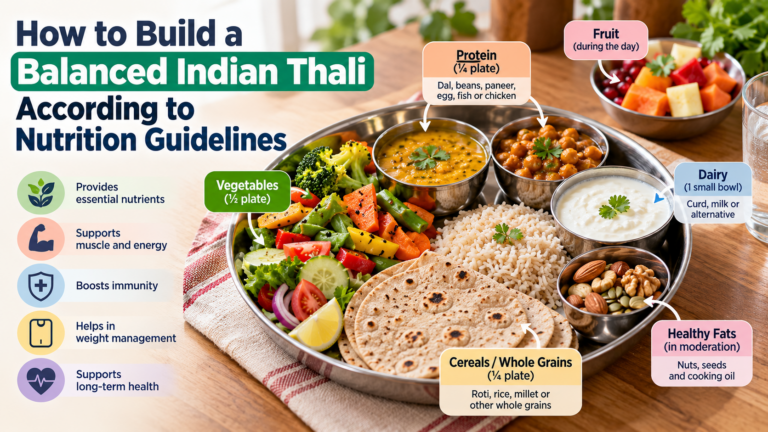
How to Build a Protein-Rich Indian Plate
A simple meal structure is:
1. Protein source
Choose one:
- Dal
- Beans
- Soy/tofu
- Paneer
- Curd
- Egg
- Fish
- Chicken
2. Vegetables
Include a substantial variety of vegetables.
3. Appropriate carbohydrate
Choose according to energy needs:
- Roti
- Rice
- Millets
- Other whole grains
4. Healthy fat
Use appropriate amounts of:
- Nuts
- Seeds
- Vegetable oils
The exact portion sizes should depend on the individual’s calorie requirement and health goals.
Sample Protein-Rich Indian Day
This is an example, not an individualized prescription.
Breakfast
2 besan chillas + curd + vegetables
Mid-morning
Fruit + small portion of nuts
Lunch
2 rotis + dal + vegetable + curd + salad
Evening
Roasted chana or unsweetened curd
Dinner
Paneer/tofu OR fish/chicken + vegetables + appropriate portion of roti/rice
The total protein content depends heavily on actual portion sizes.
Protein Requirements: The Bigger Picture
Protein should not be considered in isolation.
A healthy diet also requires:
- Adequate calories
- Fiber
- Essential fatty acids
- Vitamins
- Minerals
- Adequate hydration
- Appropriate carbohydrate intake
- Food variety
ICMR-NIN’s Dietary Guidelines for Indians 2024 emphasize a balanced dietary pattern and caution against excessive reliance on protein supplements. ICMR National Institute of Nutrition
Frequently Asked Questions
How much protein should an average adult eat per day?
A commonly used reference level for healthy adults is around 0.8 g/kg/day, although requirements vary according to age, activity and health status.
Do older adults need more protein?
Generally, yes. Expert recommendations commonly suggest approximately 1.0–1.2 g/kg/day for healthy older adults. PubMed
Can vegetarians get enough protein?
Yes. Pulses, beans, soy, dairy, nuts, seeds and appropriately combined cereal-pulse foods can provide adequate protein.
Is protein powder necessary for muscle gain?
No. Adequate protein can often be obtained from food. Protein supplements may be useful in selected circumstances but are not automatically required.
Is a high-protein diet safe in kidney disease?
Not necessarily. People with kidney disease should have protein intake individualized according to kidney function and nutritional status.
Can I eat protein at every meal?
Including a protein source at each major meal can be a practical strategy, particularly when trying to maintain muscle mass. The total daily requirement remains the primary consideration.
Is more than 1.6 g/kg/day better for muscle gain?
Not necessarily. ICMR-NIN’s 2024 guidelines note that research suggests protein intake above approximately 1.6 g/kg/day does not provide additional muscle-mass benefit from prolonged resistance training in healthy adults. ICMR National Institute of Nutrition
Bottom Line
Protein is essential—but more protein is not automatically better.
For most healthy Indian adults, the priority should be a balanced, food-first diet containing adequate pulses, legumes, dairy or other suitable vegetarian sources, and/or eggs, fish or lean meat according to dietary preference.
As people age, protein requirements generally increase, particularly when the goal is to preserve muscle and physical function. Healthy older adults commonly require approximately 1.0–1.2 g/kg/day, while illness, malnutrition or other clinical situations may require individualized higher targets. PubMed
For people with kidney disease or other significant medical conditions, protein should be prescribed according to the clinical situation rather than following a generic high-protein diet.
The goal is not to eat as much protein as possible. The goal is to consume enough high-quality protein, from appropriate foods, within a balanced diet that fits your age, activity level and health needs.
Evidence-Based References
- ICMR–National Institute of Nutrition. Dietary Guidelines for Indians 2024. Government of India. ICMR National Institute of Nutrition
- ICMR-NIN Expert Group. Nutrient Requirements for Indians, Recommended Dietary Allowances and Estimated Average Requirements. ICMR-NIN. ICMR National Institute of Nutrition
- Bauer J, et al. Evidence-based recommendations for optimal dietary protein intake in older people: PROT-AGE Study Group. J Am Med Dir Assoc. PMID: 23867520. PubMed
- Deutz NEP, et al. Protein intake and exercise for optimal muscle function with aging: recommendations from the ESPEN Expert Group. PMID: 24814383. PubMed
- Volkert D, et al. ESPEN practical guideline: Clinical nutrition and hydration in geriatrics. Clinical Nutrition. PMID: 35306388. PubMed
- Dietary protein intake, protein sources & distribution patterns in community-dwelling older adults. PMID: 40023943. PubMed
SEO package for RG Wellness Clinic
SEO Title:
Meta Description:
Primary keyword:
Secondary keywords:
Suggested URL:
Suggested category:
Nutrition & Diet / Healthy Eating