
WEIGHT MANAGEMENT • MEDICAL NUTRITION THERAPY
A personalized weight loss plan is not simply a list of foods to eat or avoid. It is an individualized nutrition and lifestyle strategy designed around your health status, body measurements, food preferences, daily routine, activity level and weight-management goals.
If you have tried different diets but struggled to maintain the results, a structured and individualized approach may be more practical than repeatedly switching from one restrictive diet to another.
Looking for a Personalized Weight Loss Plan?
Get a nutrition plan designed around your health profile, food preferences, routine and weight-management goals.
What Is a Personalized Weight Loss Plan?
A personalized weight loss plan is an individualized dietary and lifestyle program rather than a one-size-fits-all diet. The objective is to create a realistic calorie and food pattern that can be followed consistently while supporting adequate nutrition and long-term weight management.
Two people with the same body weight may require very different approaches. Age, height, body composition, medical conditions, medications, physical activity, sleep, work schedule and eating habits can all influence the design of a practical plan.
The goal should therefore be sustainable weight management, not simply achieving a short-term change on the weighing scale.
Why a Personalized Approach Matters
Generic diet charts can provide useful general guidance, but they may not account for individual nutritional requirements or everyday circumstances. A personalized plan can address the factors that make a diet easier or harder to follow.
- Individual energy and nutritional requirements
- Current weight, height and body measurements
- Age and lifestyle
- Work schedule and daily activity
- Vegetarian or non-vegetarian food preferences
- Usual meal timing and eating patterns
- Medical conditions and relevant laboratory findings
- Food preferences, dislikes and cultural eating habits
- Sleep and lifestyle patterns
- Previous dieting experience and barriers to adherence
Who May Benefit From a Personalized Weight Loss Plan?
An individualized approach may be particularly useful for people who want structured guidance rather than following a generic diet available online.
- Adults looking to manage excess body weight
- People who have repeatedly regained weight after dieting
- Individuals with sedentary work routines
- People who need an Indian food-based diet plan
- Individuals with diabetes or prediabetes who need coordinated nutrition guidance
- People with high blood pressure or abnormal lipid profiles
- Individuals with fatty liver or other metabolic concerns
- People who need weight management alongside medical nutrition therapy
The appropriate dietary strategy depends on the individual’s health profile. People with diagnosed medical conditions should discuss significant dietary changes with their treating healthcare professional.
How a Personalized Weight Loss Plan Is Designed
1. Understand Your Current Health Profile
A good starting point is understanding the person’s current health status. This may include medical history, relevant medications, available laboratory reports, previous weight changes and current nutritional concerns.
2. Assess Body Measurements
Height, weight and other relevant measurements can help establish the current nutritional and weight-management status. Body mass index (BMI) may be used as one screening measure, but it should not be interpreted in isolation.
3. Review Current Eating Habits
The plan should consider what the person actually eats rather than assuming an ideal eating pattern. Meal frequency, portion sizes, snacks, beverages, eating outside the home and weekend eating habits can all be relevant.
4. Consider Daily Routine
A diet that does not fit someone’s working hours, family routine or access to food is difficult to maintain. Meal timing and food choices should therefore be adapted to the individual’s practical circumstances.
5. Establish Realistic Goals
Weight management should focus on achievable and sustainable changes. Rather than relying on extreme restriction, the plan should encourage consistent improvements in food quality, portions, activity and lifestyle.
6. Monitor and Adjust
A personalized plan should not necessarily remain unchanged indefinitely. Progress, adherence, hunger, energy levels, dietary preferences and changes in health status can help determine whether adjustments are appropriate.
What Should a Balanced Weight Loss Diet Include?
A weight-management diet should provide adequate nutrition while helping control overall energy intake. Food choices should be practical and compatible with the individual’s usual diet.
Protein-Rich Foods
Depending on individual requirements, meals may include pulses, beans, lentils, dairy products, eggs, fish, poultry or other appropriate protein sources.
Vegetables
A variety of vegetables can improve dietary quality and provide fibre, vitamins and minerals while contributing to meal volume.
Whole or Minimally Processed Foods
Whole grains, pulses, vegetables, fruits, nuts and seeds can form part of a balanced dietary pattern when portions are appropriate.
Healthy Fats
Nuts, seeds and suitable cooking oils can be incorporated in appropriate quantities as part of a balanced diet.
Indian Foods Can Be Part of a Weight Loss Diet
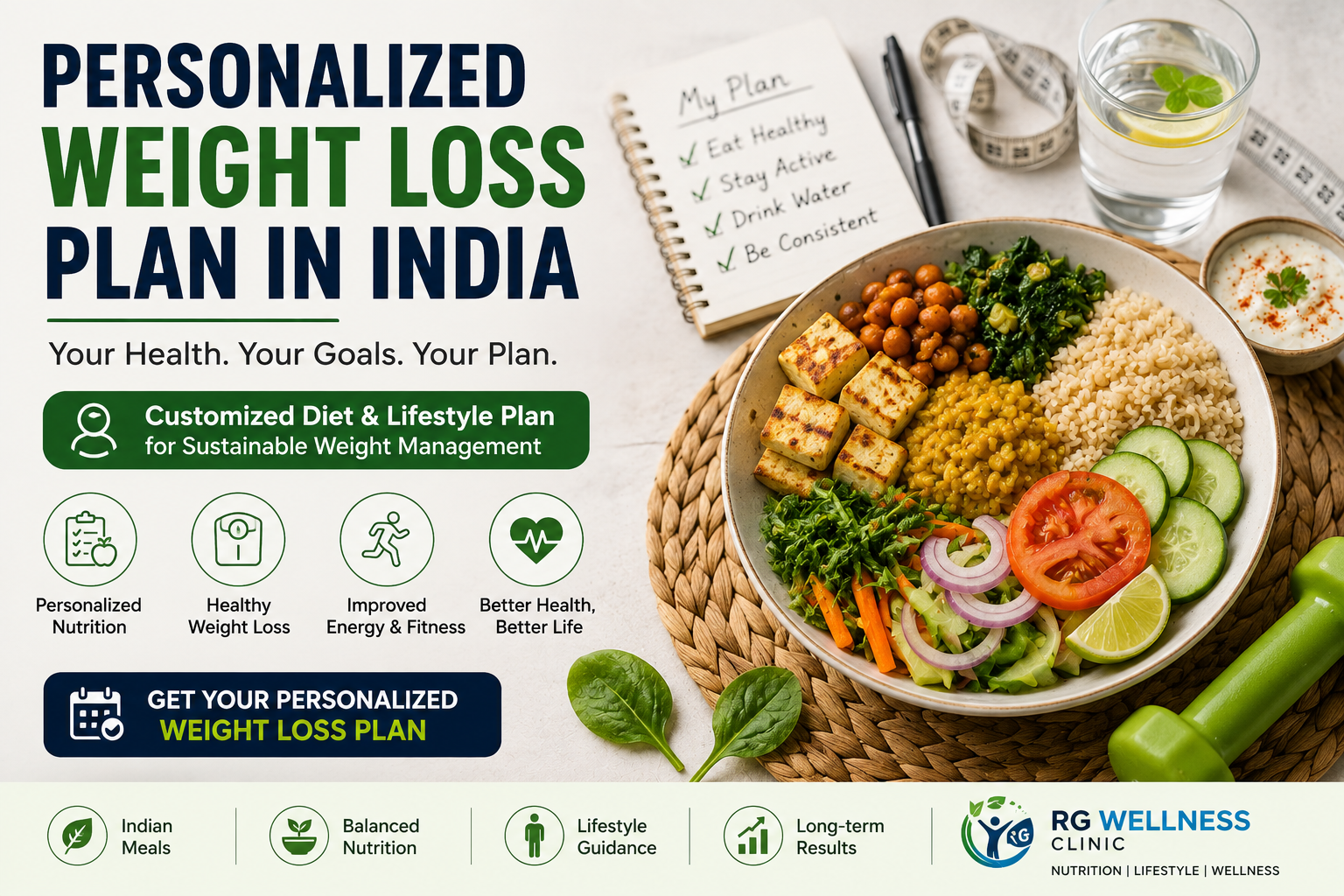
A weight loss plan does not have to eliminate traditional Indian foods. The more useful approach is often to modify portions, preparation methods and meal composition while retaining foods that are familiar and acceptable.
Depending on individual requirements, meals may include foods such as roti, dal, vegetables, curd, rice, idli, dosa, poha, upma, legumes and other regional foods.
The important consideration is the overall dietary pattern, portion size, cooking method and frequency of energy-dense foods rather than declaring individual traditional foods universally “good” or “bad.”
Common Reasons Weight Loss Plans Fail
Difficulty losing or maintaining weight is not always a matter of willpower. Several practical and behavioural factors can interfere with adherence.
- Very restrictive diets that are difficult to maintain
- Unrealistic expectations about the speed of weight loss
- Skipping meals followed by overeating
- Frequent consumption of calorie-dense snacks or beverages
- Insufficient physical activity
- Poor sleep or irregular sleep schedules
- Eating patterns that do not fit the person’s work routine
- Lack of follow-up and adjustment
- Following a generic diet without considering individual health needs
Personalized Weight Loss Plan vs. Generic Diet Chart
| Generic Diet Chart | Personalized Weight Loss Plan |
|---|---|
| Usually designed for a broad population | Designed around the individual’s requirements |
| May not consider medical history | Can incorporate relevant health information |
| Fixed meal pattern | Meal timing can be adapted to daily routine |
| Limited consideration of food preferences | Food choices can be adapted to preferences and culture |
| Often followed without structured review | Can be reviewed and adjusted according to progress |
Weight Loss Should Be About More Than the Scale
Body weight is an important measure, but it is not the only indicator of progress. Depending on the person’s goals, progress may also involve improvements in dietary consistency, physical activity, waist measurements, metabolic health markers or the ability to maintain healthier habits.
A sustainable approach should therefore focus on building habits that can continue beyond the initial weight-loss phase.
When Medical Nutrition Therapy May Be Appropriate
Some individuals require more than general weight-management advice. Nutrition planning may need to take existing medical conditions, laboratory findings or treatment goals into account.
Medical Nutrition Therapy (MNT) can provide individualized nutrition guidance when diet needs to be coordinated with a person’s medical condition and overall treatment plan.
Examples may include weight management in the context of diabetes, hypertension, dyslipidemia, fatty liver disease or other nutrition-related conditions.
Your Diet Should Fit Your Health and Your Life
A personalized plan starts with understanding your current health, eating habits and daily routine.
Frequently Asked Questions
What is the best personalized weight loss plan?
There is no single best plan for everyone. An appropriate plan should be nutritionally balanced, realistic, compatible with the person’s preferences and adjusted according to individual health and lifestyle requirements.
Can I follow an Indian diet for weight loss?
Yes. A weight-management diet can incorporate many traditional Indian foods. Portion control, meal composition, cooking methods and overall dietary quality are important considerations.
Is a personalized diet better than a generic diet?
Personalization can make a dietary plan more compatible with an individual’s health requirements, preferences, routine and ability to maintain the plan. However, the appropriate approach varies from person to person.
How quickly should I expect weight loss?
Weight change varies considerably between individuals. A sustainable approach generally focuses on gradual, consistent progress rather than extreme short-term restriction.
Can a personalized plan help if I have diabetes or high blood pressure?
Nutrition planning can be coordinated with medical conditions such as diabetes or hypertension. However, people with these conditions should ensure that dietary changes are appropriate for their individual clinical situation and treatment.
Do I need to stop eating carbohydrates to lose weight?
Not necessarily. Weight management depends on the overall dietary pattern, energy intake, food quality and individual requirements. Carbohydrate sources can be incorporated into a balanced diet in appropriate portions.
Take the Next Step Toward a Personalized Weight Management Plan
If you are looking for a personalized weight loss plan in India, the first step is understanding your individual requirements rather than copying a diet chart designed for someone else.
At RG Wellness Clinic, nutrition guidance can be structured around your health profile, dietary preferences, lifestyle and weight-management goals.
Ready to Get Started?
Start with a personalized nutrition consultation and discuss the most practical approach for your weight-management goals.