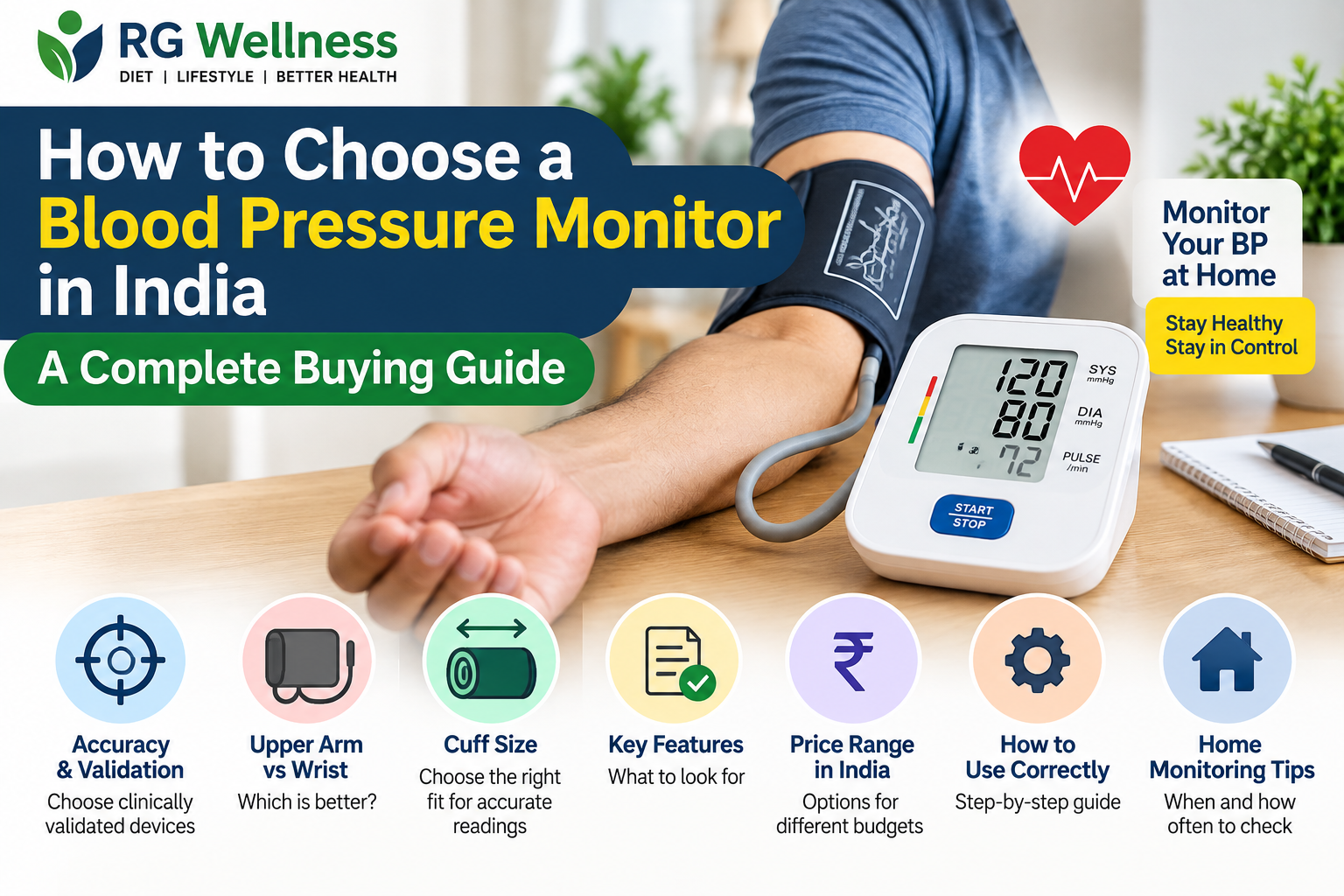

For home blood-pressure monitoring, the most important feature is not a long list of smart functions—it is measurement accuracy and correct technique. For most adults, a validated automatic upper-arm blood-pressure monitor with the correct cuff size is generally preferable to relying on wrist or finger devices.
- Prefer a validated automatic upper-arm monitor.
- Choose a cuff that fits the measured upper-arm circumference.
- Look for independent validation rather than relying only on marketing claims.
- Learn correct positioning and repeat measurements when appropriate.
- Take the monitor to a clinical visit occasionally so its readings can be compared with the clinic device.
What should you look for in a BP monitor?
1. Upper-arm measurement
Upper-arm automated devices are widely used for home blood-pressure monitoring. Wrist devices can be more sensitive to positioning and are generally not the first choice when an appropriately fitting upper-arm cuff is available.
2. Validation
Check whether the exact model has undergone recognized independent clinical validation. Do not assume that every device sold online has been validated simply because it displays a medical-sounding certification.
3. Correct cuff size
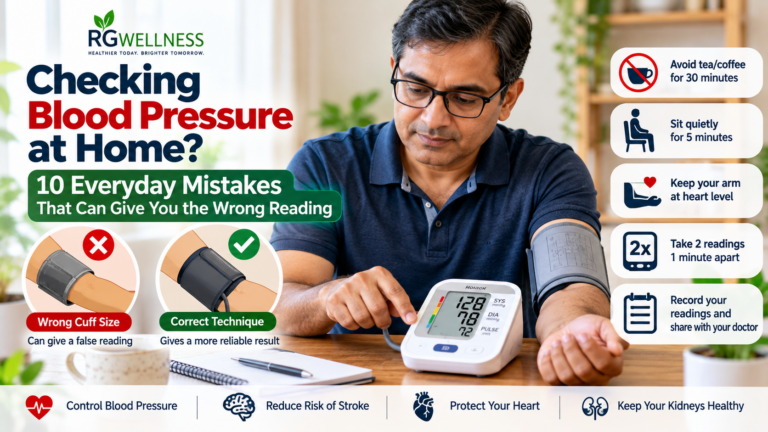
Cuff size matters. Measure the circumference of the upper arm and select the manufacturer’s recommended cuff range. A cuff that is too small or too large can contribute to inaccurate readings.
4. Memory and averaging
For people monitoring hypertension, memory storage and the ability to review multiple readings can be useful. These features are secondary to accuracy.
5. Power and usability
Choose a device that is easy for the intended user to operate consistently. Battery or adapter options can be helpful, particularly for regular home monitoring.
How to measure BP correctly at home
- Avoid exercise, smoking and caffeine immediately before measurement when possible.
- Empty your bladder if needed and rest quietly for about five minutes.
- Sit with your back supported and feet flat on the floor.
- Keep the arm supported at approximately heart level.
- Place the cuff on bare skin according to the manufacturer’s instructions.
- Do not talk during the measurement.
- Take repeated readings when your clinician has advised a home-monitoring schedule.
Should you buy a smartwatch or wearable for BP?
Wearable and cuffless technologies are evolving, but they should not automatically be treated as equivalent to a validated upper-arm cuff for diagnosing or managing hypertension. If blood-pressure decisions depend on the result, use a clinically validated method and discuss unusual readings with a clinician.
What if home BP is repeatedly high?
Do not diagnose hypertension from a single home reading. Record readings using a consistent technique and discuss the pattern with your healthcare professional. If blood pressure is extremely high and is accompanied by symptoms such as chest pain, severe breathlessness, neurological symptoms or severe headache, seek urgent medical care.
Frequently asked questions
Which type of BP monitor is generally preferred?
A validated automatic upper-arm monitor with a correctly fitting cuff is generally the practical first choice for home use.
Is a digital BP monitor accurate?
Accuracy depends on the specific device, validation status, cuff fit and measurement technique. Digital does not automatically mean accurate.
Can two BP machines give different readings?
Yes. Device differences, cuff size, body position and timing can all affect readings.
Medical note
This guide is educational and does not replace clinical diagnosis. Medication changes should not be made solely on the basis of home BP readings without medical advice.
References
- American Heart Association. Home blood pressure monitoring guidance.
- European Society of Hypertension. Guidance on home blood pressure monitoring.
- STRIDE BP. International resources on validated blood-pressure devices.