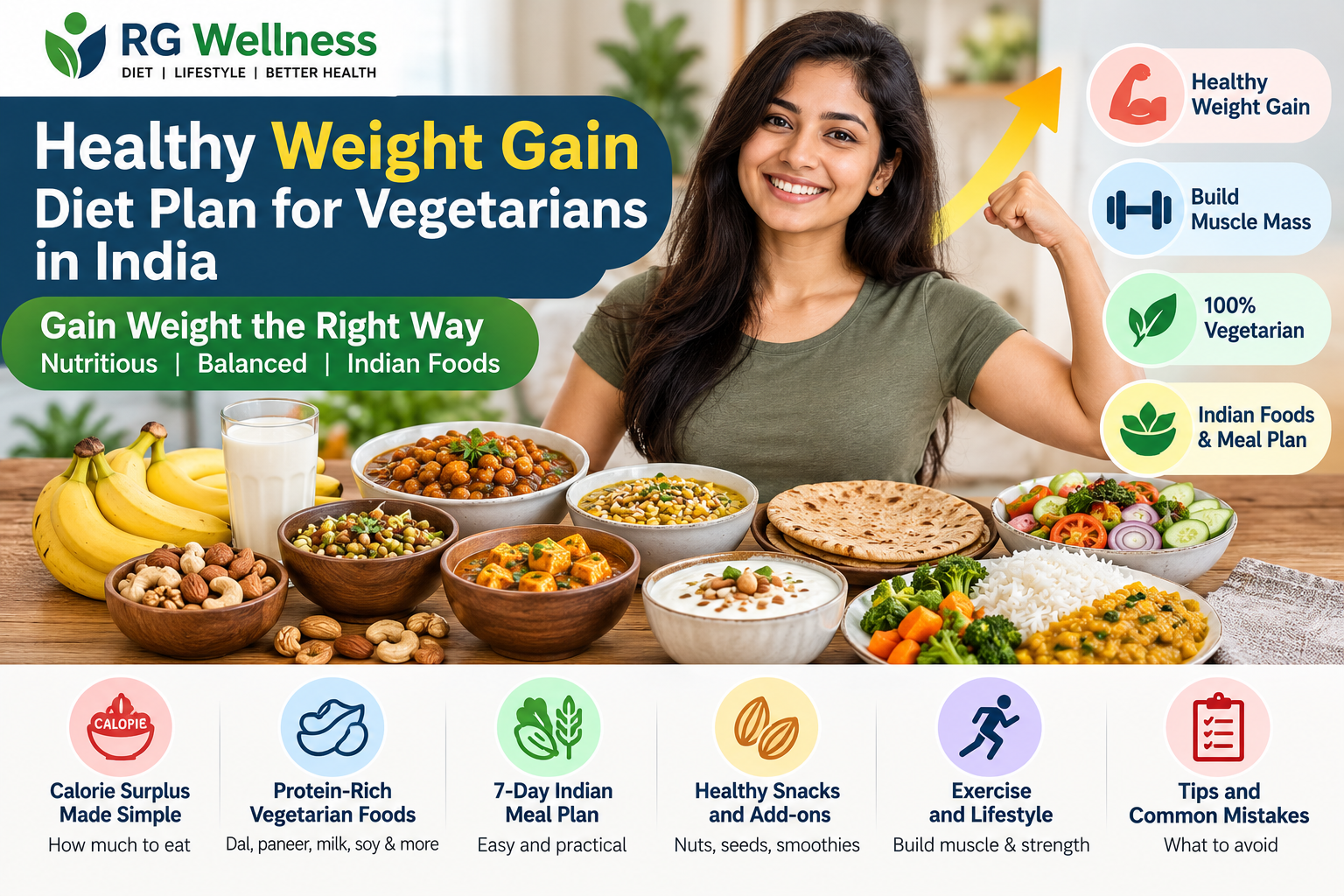

A healthy weight-gain plan should aim for gradual weight gain with adequate protein, energy, micronutrients and resistance exercise, rather than simply increasing sweets, fried foods or sugary drinks. For Indian vegetarians, meals can be built around dal, beans, soy, paneer, curd, milk, whole grains, nuts, seeds, vegetables and fruit.
- Weight gain works best when energy intake is consistently higher than energy expenditure.
- Include a meaningful protein source at regular meals.
- Use calorie-dense but nutrient-rich foods such as nuts, seeds, dairy, soy and appropriate oils.
- Resistance training can help support lean-mass gain.
- Unintentional or unexplained weight loss needs medical assessment before starting a high-calorie diet.
Who may need a weight-gain plan?
A structured plan may be useful for people who are underweight, have inadequate dietary intake, are recovering from illness, or are struggling to meet energy needs. The correct calorie and protein targets depend on age, body size, activity, medical conditions and treatment goals.
Indian vegetarian foods that can support healthy weight gain
| Food group | Examples | Practical use |
|---|---|---|
| Protein-rich foods | Dal, rajma, chana, soy, paneer, curd, milk | Add to main meals or snacks |
| Whole grains | Roti, rice, oats, daliya, millets | Increase portions according to energy needs |
| Nuts/seeds | Peanuts, almonds, walnuts, sesame, flax | Add to snacks, curd or meals |
| Fruit | Banana, mango when in season, chikoo, dates in appropriate portions | Use with milk/curd or meals |
| Healthy fats | Groundnut, mustard, sesame or other suitable oils | Use measured amounts in cooking |
Sample one-day vegetarian pattern
Breakfast: vegetable poha/upma or stuffed roti with curd, plus milk if tolerated.
Mid-morning: fruit with a small portion of nuts or seeds.
Lunch: roti/rice, dal or rajma/chana, vegetables, curd and a measured amount of oil/ghee as appropriate.
Evening: milk or curd-based snack, roasted chana/peanuts or another protein-rich option.
Dinner: roti/rice with dal/soy/paneer, vegetables and curd.
Bedtime, if required: milk or another clinically appropriate snack.
How much protein is needed?
Protein requirements should be individualized. People with kidney disease, liver disease or other medical conditions may need different targets. A generic high-protein diet is therefore not appropriate for everyone.
Common mistakes
- Trying to gain weight mainly through sweets, sugary beverages and deep-fried foods.
- Skipping meals and attempting to compensate with one very large meal.
- Ignoring protein intake.
- Starting supplements without assessing the diet and medical history.
- Assuming unexplained weight loss is simply due to “low appetite.”
When should medical assessment come first?
Unintentional weight loss, persistent diarrhea, prolonged constipation, difficulty swallowing, persistent vomiting, fever, chronic cough, excessive thirst or urination, palpitations, or other unexplained symptoms warrant medical evaluation.
Frequently asked questions
Can a vegetarian gain weight without junk food?
Yes. Adequate portions of grains, pulses, dairy or suitable alternatives, nuts, seeds, soy and other nutrient-dense foods can provide substantial energy and protein.
Is banana good for weight gain?
Banana can be part of a weight-gain diet, particularly when combined with other nutrient-dense foods. Portion and overall dietary pattern still matter.
Are weight-gain supplements necessary?
Not usually for everyone. Food-first planning is generally preferable, while supplements may have a role in selected people after assessment.
Medical note
This is a general Indian vegetarian framework, not an individualized prescription. People with diabetes, kidney disease, fatty liver, gastrointestinal disease or other conditions need condition-specific modifications.
References
- ICMR-NIN. Dietary Guidelines for Indians, 2024.
- Indian Dietetic Association resources on balanced dietary planning.