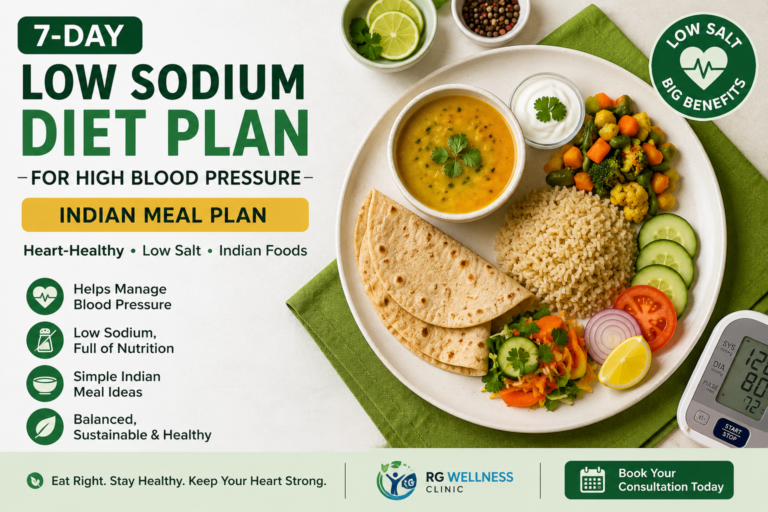
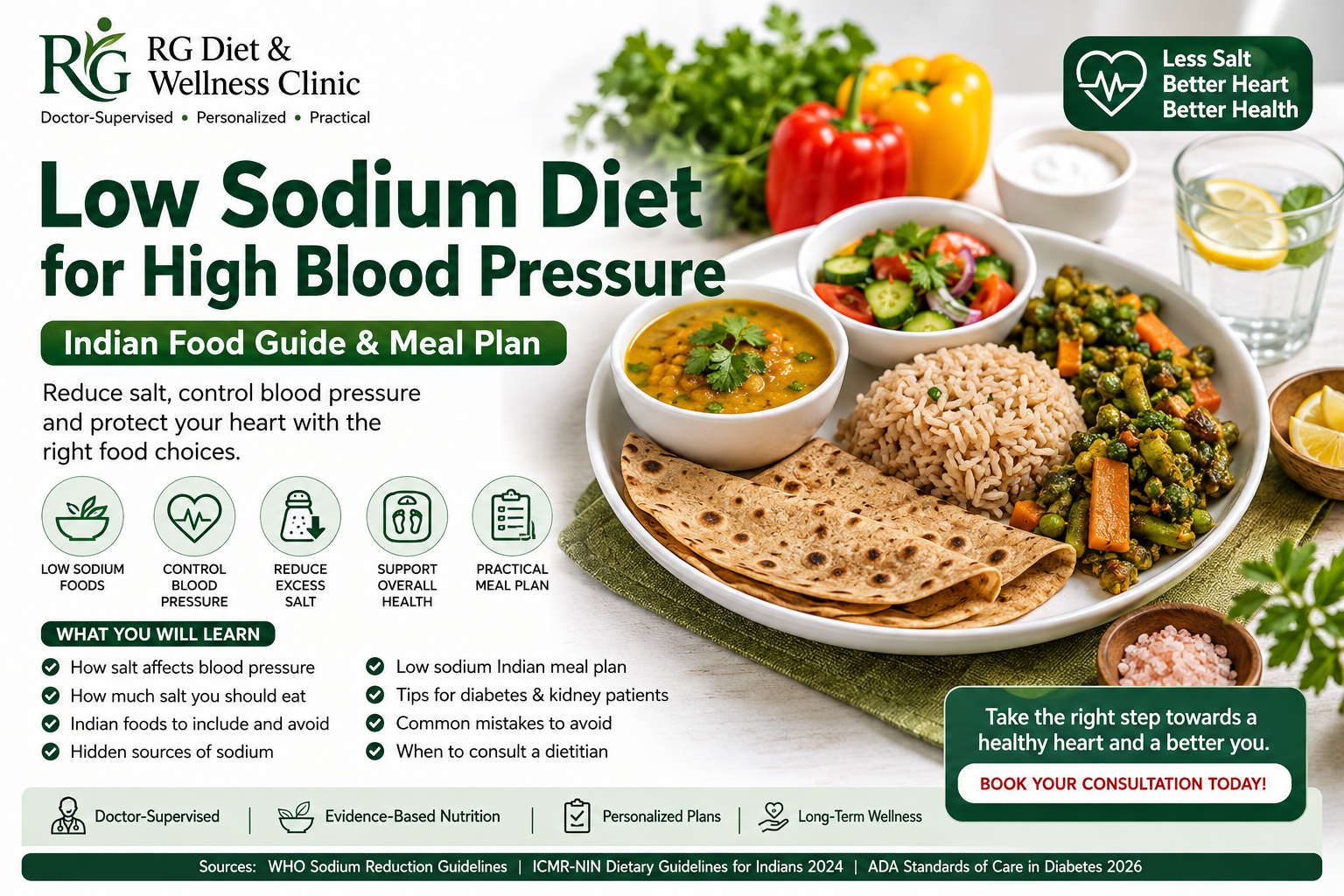

A practical, evidence-based guide to reducing sodium intake, choosing healthier Indian foods, understanding hidden salt and building a sustainable diet for people with high blood pressure.
For adults, the World Health Organization recommends less than 2,000 mg of sodium per day, equivalent to less than 5 g of salt per day. Sodium reduction is an important part of lifestyle management for people with high blood pressure.
How Does Sodium Affect Blood Pressure?
Sodium is an essential mineral involved in fluid balance, nerve function and other physiological processes. However, excessive sodium intake can increase blood pressure in many people.
Persistent high blood pressure increases the risk of cardiovascular and kidney complications. Reducing excessive sodium intake is therefore an important component of a heart-healthy lifestyle.
Importantly, sodium does not come only from the salt shaker. Packaged foods, processed foods, sauces, snacks, preserved foods and restaurant meals can also contribute substantial amounts.
A person may rarely add salt at the table and still consume a high-sodium diet because of packaged and prepared foods.
How Much Salt Should You Eat?
WHO recommends that adults consume less than 2,000 mg of sodium per day, equivalent to less than 5 g of salt per day.
The ICMR-NIN Dietary Guidelines for Indians 2024 also recommend limiting salt intake to a maximum of 5 g per day.
| Measure | General adult target |
|---|---|
| Sodium | Less than 2,000 mg/day |
| Salt | Less than 5 g/day |
| Approximate conversion | 1 g salt provides approximately 400 mg sodium |
The target refers to total dietary intake. It is not simply the amount of salt added at the dining table.
Low-Sodium Indian Food Choices
Following a low-sodium diet does not mean giving up Indian food. Traditional meals can be adapted by emphasizing fresh ingredients, vegetables, pulses, whole grains and minimally processed foods.
Choose More Often
- Fresh vegetables
- Whole fruits
- Fresh pulses and legumes
- Whole grains
- Unsalted nuts and seeds
- Fresh eggs
- Fresh fish or chicken
- Plain curd
Limit or Use Carefully
- Pickles
- Papad
- Namkeen
- Salted nuts
- Packaged soups
- Instant noodles
- Commercial sauces
- Ready-to-eat foods
Foods to Choose More Often on a Low-Sodium Diet
Vegetables
Fresh vegetables can form a major part of a heart-healthy dietary pattern. Suitable choices include leafy vegetables, beans, cabbage, cauliflower, gourds, okra, capsicum, tomato and cucumber.
Whole Fruits
Whole fruits can be included according to individual calorie and carbohydrate requirements. Examples include guava, apple, orange, pear and papaya.
Pulses and Legumes
Moong dal, masoor dal, chana dal, chickpeas, rajma and lobia can provide protein, fibre and other nutrients while allowing sodium to remain under better dietary control.
Whole Grains
Whole-wheat roti, oats, barley, millets and other suitable whole grains can be incorporated according to individual nutritional requirements.
Protein Foods
Fresh eggs, fish, chicken, curd, tofu and pulses can be incorporated into a balanced meal pattern.
Foods to Limit on a Low-Sodium Diet
Some foods can contribute disproportionately to daily sodium intake. Their frequency and portion should be reviewed when planning a low-salt diet.
- Pickles: often contain substantial added salt.
- Namkeen: commonly contains added salt and may also be high in fat.
- Papad: sodium content varies considerably by product.
- Packaged soups: check sodium per serving.
- Instant noodles: seasoning packets can contain substantial sodium.
- Processed meats: often contain added sodium.
- Commercial sauces: may contribute significant sodium.
- Ready-to-eat meals: sodium content can be difficult to estimate.
Low-Sodium Indian Meal Plan: A Practical Framework
There is no single low-sodium meal plan suitable for every person with hypertension. Calorie, carbohydrate, protein, potassium, fluid and other nutritional requirements may vary according to health status.
Breakfast
Choose a minimally processed breakfast containing an appropriate whole-grain and/or protein component with vegetables where suitable.
Mid-Morning
A suitable whole fruit may be included according to individual calorie and carbohydrate requirements.
Lunch
Vegetables + dal or another protein source + an appropriate portion of roti, rice or another suitable cereal.
Evening Snack
Prefer fresh or minimally processed foods rather than namkeen, salted nuts or packaged salty snacks.
Dinner
Build the meal around vegetables and an appropriate protein source with a suitable cereal portion.
Beverages
Prefer water and suitable unsweetened beverages according to individual requirements.
The exact calories, portions, sodium and macronutrient distribution should be individualized rather than copied from a generic diet chart.
Low-Sodium Diet for People With Diabetes
People with diabetes and hypertension often require an integrated nutrition strategy. Sodium reduction should be combined with appropriate carbohydrate quality, portion control, fibre, protein and overall energy intake.
A low-sodium diet should therefore not simply be added to a diabetes diet without reviewing the complete dietary pattern.
Read our Diabetes Diet Plan for detailed Indian nutrition guidance.
Low-Sodium Diet With Kidney Disease
Sodium restriction can be important in kidney disease, but kidney nutrition requires more than simply reducing salt.
Depending on kidney function and treatment, the diet may also require individual adjustment of potassium, phosphorus, protein, fluid and energy.
People with chronic kidney disease should therefore obtain individualized dietary advice rather than combining multiple restrictive diets on their own.
See our Kidney Disease Diet Plan for condition-specific nutrition information.
7 Common Low-Sodium Diet Mistakes
- Only removing the salt shaker. Packaged foods may still provide substantial sodium.
- Eating pickle with every meal. Pickles can be a major source of added salt.
- Replacing salt with salty sauces. Commercial sauces may contain significant sodium.
- Ignoring nutrition labels. Serving size and sodium per serving both matter.
- Eating restaurant food frequently. The actual salt content is often difficult to estimate.
- Using potassium-based salt substitutes without checking suitability. These may not be appropriate for some people with kidney disease or certain medication regimens.
- Following another person’s diet chart. A clinically appropriate sodium restriction should be individualized.
When Do You Need a Personalized Diet Plan?
A general low-sodium diet can provide useful education. However, professional Medical Nutrition Therapy is particularly valuable when hypertension occurs with other medical or nutritional concerns.
A personalized assessment may consider:
- Blood pressure pattern
- Age and body composition
- Dietary habits
- Diabetes or prediabetes
- Kidney function
- Lipid profile
- Current medications
- Physical activity
- Weight-management goals
- Food preferences and cultural eating patterns
The goal is not simply to create a “no-salt diet”. The goal is to develop a nutritionally adequate, clinically appropriate and sustainable dietary pattern.
Explore our Medical Nutrition Therapy or Personalized Diet Plans for individualized nutrition planning.
Frequently Asked Questions
How much salt can I eat with high blood pressure?
WHO recommends less than 5 g of salt per day for adults, equivalent to less than 2,000 mg of sodium. Individual clinical recommendations may vary.
Is a low-sodium diet the same as a no-salt diet?
No. Sodium is an essential nutrient. The goal is to reduce excessive sodium intake to an appropriate level rather than unnecessarily eliminate all dietary sodium.
Can I eat roti if I have high blood pressure?
Yes. Plain roti can be part of a low-sodium dietary pattern. The amount of salt used during preparation and the foods served with it should also be considered.
Can I eat rice with high blood pressure?
Yes. Rice itself is not inherently high in sodium. Portion size, preparation and accompanying foods are important.
Can I eat pickle on a low-salt diet?
Pickles are often high in salt and generally need to be substantially limited when following a sodium-restricted diet.
Is low-sodium salt safe for everyone?
Not necessarily. Some salt substitutes contain potassium and may not be appropriate for people with certain kidney conditions or medication regimens. Discuss their use with your clinician when appropriate.
Is diet alone enough to control high blood pressure?
Diet is an important component of hypertension management, but some people also require medication and other lifestyle interventions. Do not stop or change prescribed medication without medical advice.
Need a Personalized Diet Plan?
Your nutrition plan should consider more than your blood pressure reading. A professional assessment can integrate hypertension with diabetes, kidney health, cholesterol, weight management, medications and your usual Indian food pattern.
Explore Personalized Diet PlansMedical Disclaimer
This article is intended for general educational purposes and does not replace individualized medical assessment, diagnosis or treatment. People with hypertension, kidney disease, heart failure, diabetes, electrolyte abnormalities or other chronic conditions should obtain appropriate medical and nutrition advice. Do not stop or change prescribed medication based solely on information in this article.