

A practical, evidence-based guide to carbohydrate quality, portion control, Indian foods and individualized Medical Nutrition Therapy
Diabetes nutrition is not about eliminating every carbohydrate or following a rigid list of “allowed” and “forbidden” foods. A professional diabetes diet plan should be individualized according to the person’s nutritional needs, eating pattern, physical activity, medications, metabolic goals, cultural food preferences and other medical conditions.
Current diabetes guidance emphasizes individualized Medical Nutrition Therapy and eating patterns built around nutrient-dense foods rather than a single universal diet.
At RG Wellness Clinic, diabetes nutrition can be approached as part of a broader Medical Nutrition Therapy process, rather than as a generic diet chart.
What Is a Diabetes Diet Plan?
A diabetes diet plan is an individualized eating pattern designed to help a person:
- Improve overall dietary quality
- Manage carbohydrate intake appropriately
- Support individualized blood-glucose targets
- Maintain or achieve an appropriate body weight
- Support blood-pressure and lipid goals
- Reduce excessive intake of refined carbohydrates and added sugars
- Meet protein, fibre, vitamin and mineral requirements
- Fit realistically into the person’s daily life
The American Diabetes Association’s Standards of Care in Diabetes—2026 specifically states that there is no single eating pattern suitable for everyone with diabetes and recommends individualized nutrition therapy based on nutritional quality, total energy intake and metabolic goals.
For patients requiring a customized plan, see the Personalized Diet Plans service.
The Most Important Principle: Quality Matters
A diabetes-friendly diet should focus on the overall eating pattern, not simply on whether a particular food contains carbohydrate.
A high-quality dietary pattern generally emphasizes:
- Non-starchy vegetables
- Whole fruits
- Pulses and legumes
- Whole grains
- Nuts and seeds
- Appropriate protein sources
- Healthier unsaturated fats
- Minimally processed foods
It should limit excessive intake of:
- Sugar-sweetened beverages
- Sweets
- Refined grains
- Highly processed foods
- Excess saturated fat
- Foods high in free sugars
These principles are consistent with the 2026 ADA Standards of Care.
The World Health Organization’s current healthy-diet guidance similarly emphasizes adequacy, balance, moderation and diversity, with carbohydrates primarily coming from whole grains, vegetables, fruits and pulses.
Carbohydrates and Diabetes
Carbohydrates are an important source of energy. The goal in diabetes is generally not to eliminate carbohydrates completely, but to choose appropriate sources and portions.
Better carbohydrate sources can include:
- Whole wheat
- Oats
- Millets
- Brown rice
- Other whole grains
- Dal
- Chickpeas
- Rajma
- Lobia
- Vegetables
- Whole fruits
WHO recommends that carbohydrates should primarily come from whole grains, vegetables, fruits and pulses.
The quantity required varies between individuals.
A person’s carbohydrate prescription may depend on:
- Body size
- Physical activity
- Medication
- Insulin regimen
- Glucose targets
- Weight-management goals
- Kidney function
- Usual dietary pattern
Indian Foods That Can Fit Into a Diabetes Diet
A diabetes diet does not have to be a Western diet. Traditional Indian foods can be incorporated into a well-planned eating pattern.
Cereals and Grains
Depending on individual requirements, options may include:
- Whole-wheat roti
- Oats
- Barley
- Millets
- Brown rice
- Other minimally processed whole grains
The important consideration is portion size, preparation and the overall meal composition.
Dal, Pulses and Legumes
Pulses can provide carbohydrate, plant protein and dietary fibre.
Examples include:
- Moong dal
- Masoor dal
- Chana dal
- Arhar/toor dal
- Chickpeas
- Rajma
- Lobia
- Soy-based foods
Including pulses with vegetables and an appropriate cereal portion can help create a more balanced meal.
Vegetables
Non-starchy vegetables are an important component of a diabetes-friendly eating pattern.
Examples include:
- Spinach
- Cauliflower
- Cabbage
- Beans
- Capsicum
- Tomato
- Cucumber
- Gourds
- Brinjal
- Okra
- Radish
- Carrot in appropriate portions
The preparation method also matters. Deep-frying vegetables or preparing them with excessive fat can substantially change the nutritional profile of the meal.
Fruits and Diabetes
A common misconception is that people with diabetes must completely avoid fruit.
In many diabetes meal patterns, whole fruit can be included in appropriate portions.
Examples include:
- Apple
- Guava
- Orange
- Pear
- Papaya
- Berries where available
- Melon
- Other locally available whole fruits
Whole fruit is generally preferable to fruit juice because juice can provide a concentrated source of free sugars with less fibre and less chewing.
WHO specifically recommends whole fruits and vegetables as part of a healthy dietary pattern and notes that fruit juice can contain significant amounts of free sugars.
The appropriate fruit quantity and timing should still be individualized.
Can a Person With Diabetes Eat Rice?
Yes, rice does not automatically have to be eliminated.
The more important questions are:
- What type of rice is being consumed?
- How much is being eaten?
- What else is present in the meal?
- How frequently is it consumed?
- What is the individual’s glucose response?
- Are there other metabolic conditions?
A practical meal may combine an appropriate rice portion with vegetables and a suitable protein source rather than making rice the dominant component of the plate.
Roti and Diabetes
Roti can also be part of a diabetes-friendly meal.
Potential considerations include:
- Whole-grain flour
- Appropriate portion size
- Avoiding excessive added fat
- Combining roti with vegetables and protein
- Considering the total carbohydrate load of the meal
The number of rotis should not be prescribed identically for every person.
Protein in a Diabetes Diet
Protein requirements vary according to:
- Age
- Body weight
- Physical activity
- Nutritional status
- Kidney function
- Liver function
- Overall clinical condition
Potential protein sources include:
Vegetarian
- Dal
- Chana
- Rajma
- Lobia
- Soy
- Tofu
- Paneer in appropriate portions
- Curd
- Milk
- Nuts and seeds
Non-vegetarian
- Eggs
- Fish
- Chicken
- Other appropriate lean protein sources
If diabetes is accompanied by chronic kidney disease, protein and other nutrient requirements may need substantial modification. In such cases, see the Kidney Disease Diet Plan rather than following a generic high-protein diet.
Fibre and Diabetes
Fibre-rich foods can be an important part of a healthy diabetes eating pattern.
Useful sources include:
- Vegetables
- Whole fruits
- Pulses
- Whole grains
- Nuts
- Seeds
WHO recommends at least 25 g of naturally occurring dietary fibre per day for people aged 10 years and older, as part of its healthy-diet guidance. Individual needs may differ.
For patients who specifically need increased dietary fibre, see the High Fibre Diet Plan.
Sugar and Diabetes
Added/free sugars should be limited.
Common sources include:
- Sweets
- Mithai
- Sugary beverages
- Sweetened tea or coffee
- Soft drinks
- Syrups
- Sweetened desserts
- Many packaged foods
WHO recommends limiting free sugars to less than 10% of total energy intake, with additional benefit potentially obtained by reducing intake further.
However, simply removing table sugar does not automatically make a diet appropriate for diabetes. The whole dietary pattern and total carbohydrate intake matter.
What About “Sugar-Free” Products?
“Sugar-free” does not necessarily mean:
- Low calorie
- Low carbohydrate
- Suitable in unlimited quantities
- Appropriate for every person
A product should be evaluated according to its complete nutrition profile, portion size and place within the overall diet.
Healthy Fats and Diabetes
Fat is an essential nutrient, but the quality of fat matters.
Prefer appropriate sources of unsaturated fats such as:
- Nuts
- Seeds
- Fish
- Appropriate vegetable oils
- Other minimally processed sources
Excessive intake of saturated and trans fats should be avoided.
WHO recommends replacing saturated and trans fats with healthier unsaturated fats where possible.
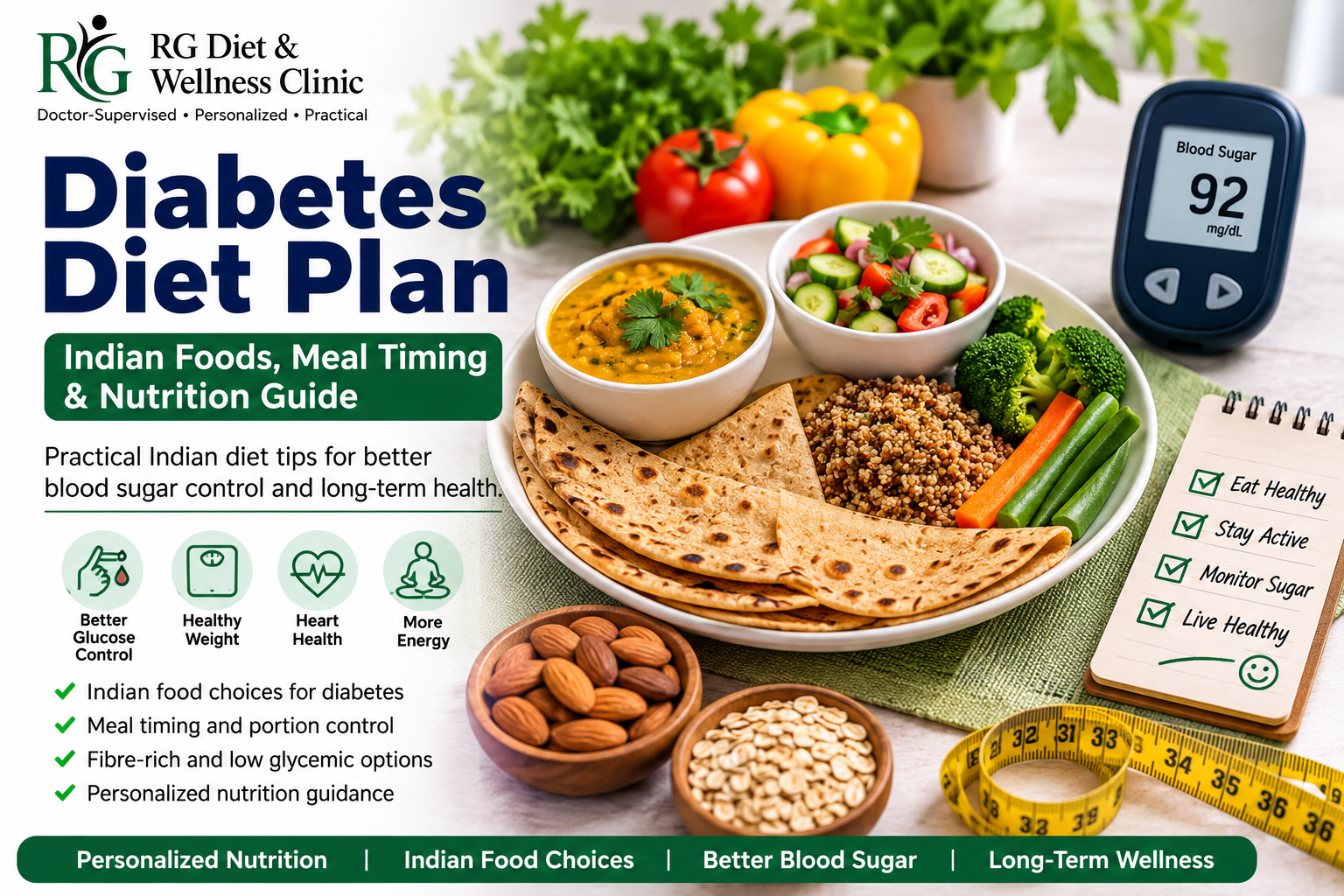
A Simple Diabetes-Friendly Indian Plate
A practical plate model can be useful for many people:
½ Plate
Non-starchy vegetables
¼ Plate
Protein-rich food
Examples:
- Dal
- Beans
- Curd
- Paneer/tofu
- Egg
- Fish
- Chicken
¼ Plate
Appropriate carbohydrate source
Examples:
- Roti
- Rice
- Whole grains
- Other suitable cereal foods
This is a general educational model, not a fixed prescription. A person’s actual portions should be individualized.
Meal Timing in Diabetes
Meal timing should be considered alongside medication, physical activity and the person’s usual routine.
A practical structure may include:
Breakfast → Lunch → Evening meal/snack if required → Dinner
The exact schedule depends on:
- Medication
- Insulin regimen
- Work schedule
- Physical activity
- Sleep pattern
- Appetite
- Glucose patterns
People using insulin or glucose-lowering medicines that can cause hypoglycaemia should not make major meal-timing changes without appropriate clinical guidance.
The ADA emphasizes that meal planning should be individualized and coordinated with the overall diabetes treatment plan.
Diabetes Diet for Vegetarians
A vegetarian diabetes meal pattern can be nutritionally adequate when appropriately planned.
A balanced pattern may include:
- Whole grains
- Vegetables
- Pulses
- Beans
- Curd
- Paneer/tofu
- Nuts
- Seeds
- Whole fruits
The focus should be on food quality, portions and overall dietary balance.
Diabetes Diet for Non-Vegetarians
A non-vegetarian meal pattern can also be compatible with diabetes management.
Potential choices include:
- Eggs
- Fish
- Chicken
- Appropriate lean protein sources
Prefer preparation methods such as:
- Grilling
- Steaming
- Baking
- Roasting
- Light cooking
rather than routinely relying on deep-fried preparations.
Diabetes and Weight Management
For people with overweight or obesity, weight management may be an important component of diabetes care.
However, weight reduction should be approached through an individualized, nutritionally adequate plan, not severe restriction.
The ADA Standards of Care recommend individualized nutrition and weight-management strategies based on nutritional, physical-activity and behavioral-health considerations.
See the Weight Loss Diet Plan for further information.
Diabetes With Hypertension
When diabetes and hypertension occur together, the diet may need additional attention to sodium, overall dietary quality, weight management and cardiovascular risk.
See the Hypertension Diet Plan for related nutritional guidance.
Diabetes With High Cholesterol
When diabetes is accompanied by dyslipidaemia, dietary planning may also focus on:
- Fat quality
- Fibre-rich foods
- Minimally processed foods
- Appropriate portions
- Weight management where appropriate
See the High Cholesterol Diet Plan.
Diabetes With Fatty Liver
Diabetes and metabolic liver disease can coexist. Nutrition planning may therefore need to address:
- Excess energy intake
- Weight management
- Refined carbohydrates
- Sugar-sweetened beverages
- Overall dietary quality
See the Fatty Liver Diet Plan for related guidance.
Diabetes With Kidney Disease
This is an important situation where a generic diabetes diet may be inappropriate.
Depending on kidney function, the diet may require individualized consideration of:
- Protein
- Sodium
- Potassium
- Phosphorus
- Fluid
- Energy
See the Kidney Disease Diet Plan and obtain individualized clinical advice.
Common Diabetes Diet Mistakes
1. Completely eliminating carbohydrates
Carbohydrates are not automatically unhealthy. The type, quantity and overall dietary pattern matter.
2. Drinking fruit juice instead of eating whole fruit
Whole fruit generally provides more fibre and requires more chewing than juice.
3. Eating excessive portions of “healthy” foods
Even nutritious foods contribute calories and carbohydrate.
4. Skipping meals without considering medication
This can be particularly problematic for people using certain glucose-lowering medicines or insulin.
5. Depending on “diabetic” packaged foods
A product marketed for diabetes is not automatically nutritionally superior.
6. Following another patient’s diet chart
Two people with diabetes may have very different nutritional and medical requirements.
7. Following an unnecessarily restrictive diet
Over-restriction can reduce dietary variety and make long-term adherence difficult.
How a Professional Diabetes Diet Plan Is Prepared
At RG Wellness Clinic, a clinically oriented nutrition plan can be structured around:
1. Nutrition Assessment
Review:
- Medical history
- Diabetes history
- Medications
- Anthropometry
- Dietary intake
- Physical activity
- Meal timing
- Lifestyle
- Relevant laboratory investigations
2. Nutrition Diagnosis
Identify the major nutrition-related problems.
3. Nutrition Intervention
Develop an individualized dietary strategy.
4. Monitoring
Review:
- Dietary adherence
- Weight
- Glucose patterns
- Relevant laboratory parameters
- Symptoms
- Practical difficulties
5. Adjustment
Modify the plan as the person’s clinical condition and goals change.
This approach is consistent with the broader principle of individualized Medical Nutrition Therapy emphasized in current diabetes standards.
Indian Diabetes Nutrition: Evidence-Based Approach
Indian dietary planning should take into account:
- Regional cuisines
- Vegetarian and non-vegetarian patterns
- Roti/rice consumption
- Pulses
- Millets
- Traditional snacks
- Festival foods
- Family eating patterns
- Work schedules
- Food availability
The WHO’s India guidance notes that healthy dietary patterns should take account of locally available foods and dietary customs.
For Indian dietary guidance, the ICMR-NIN Dietary Guidelines for Indians 2024 should also be considered when developing broader dietary recommendations.
Diabetes Diet: The Bottom Line
A good diabetes diet is not simply a “no sugar” diet.
It is a structured eating pattern that considers:
Food quality + portion size + carbohydrate management + protein + fibre + healthy fats + meal pattern + physical activity + medication + individual clinical goals
There is no single diabetes diet that is appropriate for everyone. Current ADA guidance supports individualized nutrition therapy and emphasizes nutrient-dense foods, appropriate portions and sustainable eating patterns.
For individualized planning, explore Medical Nutrition Therapy or Personalized Diet Plans.
Frequently Asked Questions
Can people with diabetes eat rice?
Yes. Rice can potentially be included in an individualized diabetes meal plan. Portion size, meal composition, type of rice and the person’s glucose response should be considered.
Can people with diabetes eat fruits?
Whole fruit can generally be incorporated into an appropriate dietary pattern. Portion size and the individual’s overall carbohydrate intake should be considered.
Is roti better than rice for diabetes?
There is no universal rule that one is always better. The quantity, preparation, overall meal composition and individual response are important.
Is oats good for diabetes?
Oats can be incorporated into many healthy eating patterns, particularly when minimally processed and consumed in an appropriate portion.
Should people with diabetes stop eating sugar completely?
Added/free sugars should be limited, but diabetes nutrition involves much more than simply avoiding table sugar.
Is the same diet suitable for every person with diabetes?
No. Current diabetes standards emphasize individualized nutrition therapy.
Can diabetes be managed with diet alone?
Some people may achieve substantial improvement through lifestyle and nutrition interventions, while others require medication or insulin. Treatment should be individualized by the healthcare team.
Related RG Wellness Resources
- Medical Nutrition Therapy
- Personalized Diet Plans
- Weight Loss Diet Plan
- Hypertension Diet Plan
- Kidney Disease Diet Plan
- Fatty Liver Diet Plan
- High Cholesterol Diet Plan
- High Fibre Diet Plan
- Therapeutic Diets