

MEDICAL NUTRITION THERAPY • HYPERTENSION
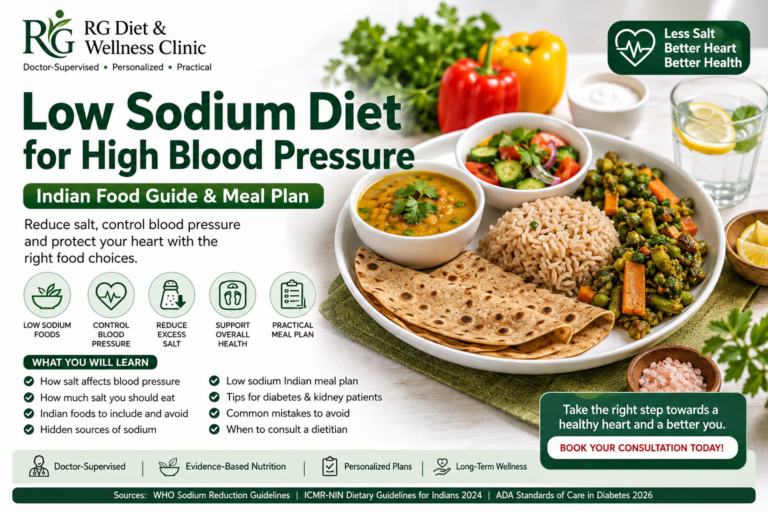
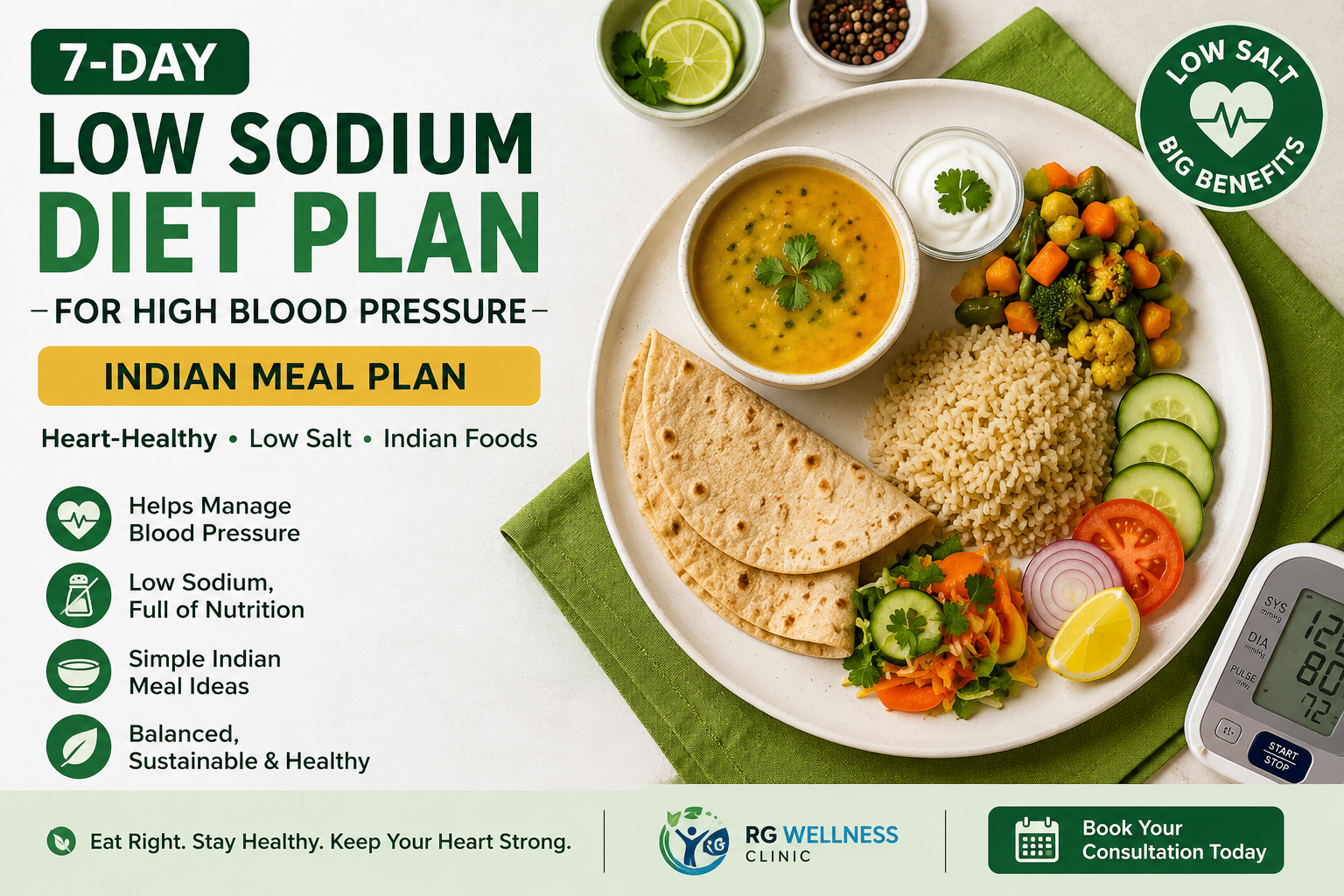
Looking for a practical low sodium diet plan that fits Indian food habits? This 7-day guide provides simple meal ideas to help you reduce excess sodium while maintaining a balanced, nutritious eating pattern.
Your ideal sodium intake and meal plan can depend on your blood pressure, kidney function, medications, diabetes status, weight, food preferences and other health conditions.
Get a Personalized Low-Sodium Diet Plan
What Is a Low Sodium Diet Plan?
A low sodium diet plan is an eating pattern that reduces excess sodium, particularly from added salt, packaged foods, salty snacks, processed foods, sauces and other high-sodium products.
Sodium is an essential mineral, but excessive sodium intake can contribute to higher blood pressure. The World Health Organization recommends that adults consume less than 2,000 mg of sodium per day, equivalent to less than 5 g of salt per day. :contentReference[oaicite:0]{index=0}
Importantly, following a low sodium diet does not mean eating bland or nutritionally inadequate food. Indian meals can remain enjoyable by using vegetables, pulses, herbs, spices, lemon, ginger, garlic and other salt-free flavouring techniques.
Who May Benefit From a Low Sodium Diet?
A lower-sodium eating pattern is commonly recommended as part of blood-pressure management and cardiovascular risk reduction. It may be particularly relevant for people with hypertension or those advised by their healthcare professional to reduce sodium intake. :contentReference[oaicite:1]{index=1}
- People with high blood pressure
- People looking to improve overall cardiovascular dietary quality
- People consuming frequent packaged or salty foods
- People who regularly add extra salt at meals
- People advised by their doctor or dietitian to restrict sodium
However, sodium and fluid recommendations are not identical for everyone. People with kidney disease, heart failure, electrolyte abnormalities or other conditions requiring medical dietary supervision may need an individualized plan.
7-Day Low Sodium Diet Plan: Indian Meal Chart
The following chart provides a practical example of how a lower-sodium Indian eating pattern can be structured. Portion sizes should be adjusted according to individual energy requirements, body size, activity level and medical needs.
| Day | Early Morning | Breakfast | Mid-Morning | Lunch | Evening Snack | Dinner |
|---|---|---|---|---|---|---|
| Day 1 | Plain water | Vegetable oats/upma + fruit | Guava / apple / orange | 2 small rotis + moong dal + mixed vegetables + plain curd + salad | Unsalted roasted chana | 2 small rotis + lauki/tori + dal + salad |
| Day 2 | Plain water | Vegetable poha + fruit | Papaya / guava | Brown rice + dal + seasonal vegetable + plain curd + salad | Unsalted nuts | 2 small rotis + mixed vegetables + moong/masoor dal |
| Day 3 | Plain water | Vegetable besan chilla + plain curd | Apple / orange / guava | 2 rotis + rajma/chana + seasonal vegetable + salad | Unsalted roasted makhana | Vegetable dalia + vegetables + plain curd |
| Day 4 | Plain water | Vegetable dalia + fruit | Seasonal fruit | 2 rotis + moong dal + bhindi + plain curd + salad | Unsalted roasted chana or nuts | Vegetable khichdi + unsalted vegetable raita |
| Day 5 | Plain water | Vegetable oats + fruit | Papaya / orange | 2 rotis + masoor dal + seasonal vegetable + salad + plain curd | Unsalted makhana | 2 rotis + lauki/tori/pumpkin + suitable protein |
| Day 6 | Plain water | Vegetable poha + fruit | Guava / apple / orange | Rice + dal + mixed vegetables + plain curd + salad | Unsalted nuts | 2 rotis + vegetable sabzi + dal + salad |
| Day 7 | Plain water | Vegetable besan chilla + plain curd + fruit | Seasonal fruit | 2 rotis + moong dal + mixed vegetables + salad + plain curd | Unsalted roasted chana/makhana | Vegetable khichdi or 2 rotis + vegetables + suitable protein |
Foods to Choose More Often
Fresh Foods
Fresh vegetables, fruits, pulses, beans and minimally processed foods can form the foundation of the diet.
Whole Grains
Choose options such as whole-wheat roti, oats, dalia and other suitable whole-grain foods.
Protein Foods
Dal, beans, pulses, unsalted nuts, seeds, curd and other appropriate protein sources can be incorporated according to individual needs.
Natural Flavour
Use lemon, coriander, mint, ginger, garlic and suitable herbs and spices to improve flavour without relying heavily on salt.
Foods to Limit in a Low Sodium Diet Plan
Reducing sodium is not only about removing the salt shaker. Sodium can also come from packaged and processed foods, salty snacks, sauces and convenience foods. :contentReference[oaicite:2]{index=2}
- Pickles and highly salted chutneys
- Papad and salted snacks
- Namkeen and packaged savoury snacks
- Instant noodles and packaged soups
- Processed meats
- Highly processed ready-to-eat foods
- Salty sauces and seasoning mixes
- Frequent restaurant and fast-food meals
- Salted nuts and seeds
- Adding extra table salt after cooking
How to Make Indian Food Lower in Sodium
- Reduce the amount of salt added during cooking.
- Avoid automatically adding salt at the dining table.
- Use lemon, herbs, ginger, garlic and spices for flavour.
- Prefer fresh foods over highly processed convenience foods.
- Check nutrition labels when buying packaged foods.
- Choose unsalted nuts and snacks where possible.
- Reduce the frequency of pickles, papad and salty namkeen.
- Compare packaged products and select lower-sodium options.
WHO also emphasizes reducing sodium from processed foods and high-sodium condiments as part of an overall sodium-reduction strategy. :contentReference[oaicite:3]{index=3}
Does Low Sodium Mean No Salt at All?
Not necessarily. A medically appropriate low sodium diet is about controlling total sodium intake rather than simply eliminating every source of salt. The appropriate target depends on the individual’s health status and clinical requirements.
For most adults, WHO recommends keeping sodium intake below 2,000 mg per day, equivalent to less than 5 g of salt per day. Individual medical advice may differ. :contentReference[oaicite:4]{index=4}
What About Low-Sodium Salt Substitutes?
Some lower-sodium salt substitutes contain potassium instead of part of the sodium. They are not appropriate for everyone. People with kidney impairment or conditions that can cause high potassium levels should not start potassium- containing salt substitutes without appropriate medical advice. :contentReference[oaicite:5]{index=5}
Therefore, changing the type of salt is not a substitute for an overall lower-sodium eating pattern.
How to Personalize a Low Sodium Diet Plan
A generic 7-day chart can be a useful starting point, but your actual diet may need to be different.
A personalized plan may consider:
- Current blood pressure readings
- Age, height and weight
- Diabetes or prediabetes
- Kidney function
- Heart and cardiovascular health
- Current medications
- Physical activity
- Vegetarian or non-vegetarian preferences
- Usual Indian meal pattern
- Food allergies and intolerances
- Work schedule and eating habits
Want a Diet Plan Designed for Your Blood Pressure?
Instead of following the same diet as everyone else, get a nutrition plan based on your health profile, food preferences and daily routine.
Get a Personalized Low-Sodium Diet PlanOnline consultation available through WhatsApp.
Frequently Asked Questions
What is the best low sodium diet plan for high blood pressure?
A suitable plan emphasizes fresh vegetables, fruits, pulses, whole grains, appropriate protein foods and minimally processed meals while limiting added salt and high-sodium packaged foods. Individual requirements vary.
Can I eat roti on a low sodium diet?
Yes. Plain homemade roti can generally be included. The overall meal, including the amount of added salt and the accompanying vegetables, dal, sauces and other foods, should be considered.
Can I eat rice on a low sodium diet?
Plain rice can be included as part of a balanced meal. Avoid turning it into a high-sodium meal through salty sauces, processed accompaniments or excessive added salt.
Can I eat fruit with high blood pressure?
Fresh fruit can be part of a balanced diet. The choice and portion should be individualized when other conditions such as diabetes or kidney disease are present.
Should I completely stop eating salt?
Not necessarily. The goal is to control total sodium intake. WHO recommends less than 2,000 mg sodium per day for adults, equivalent to less than 5 g salt per day, while individual clinical requirements can differ.
Medical Disclaimer
This article is intended for general nutrition education and does not replace individual medical assessment, diagnosis or treatment. People with kidney disease, heart failure, electrolyte abnormalities, pregnancy, significant cardiovascular disease or other medical conditions requiring dietary supervision should obtain individualized advice from their healthcare professional before making major dietary changes.