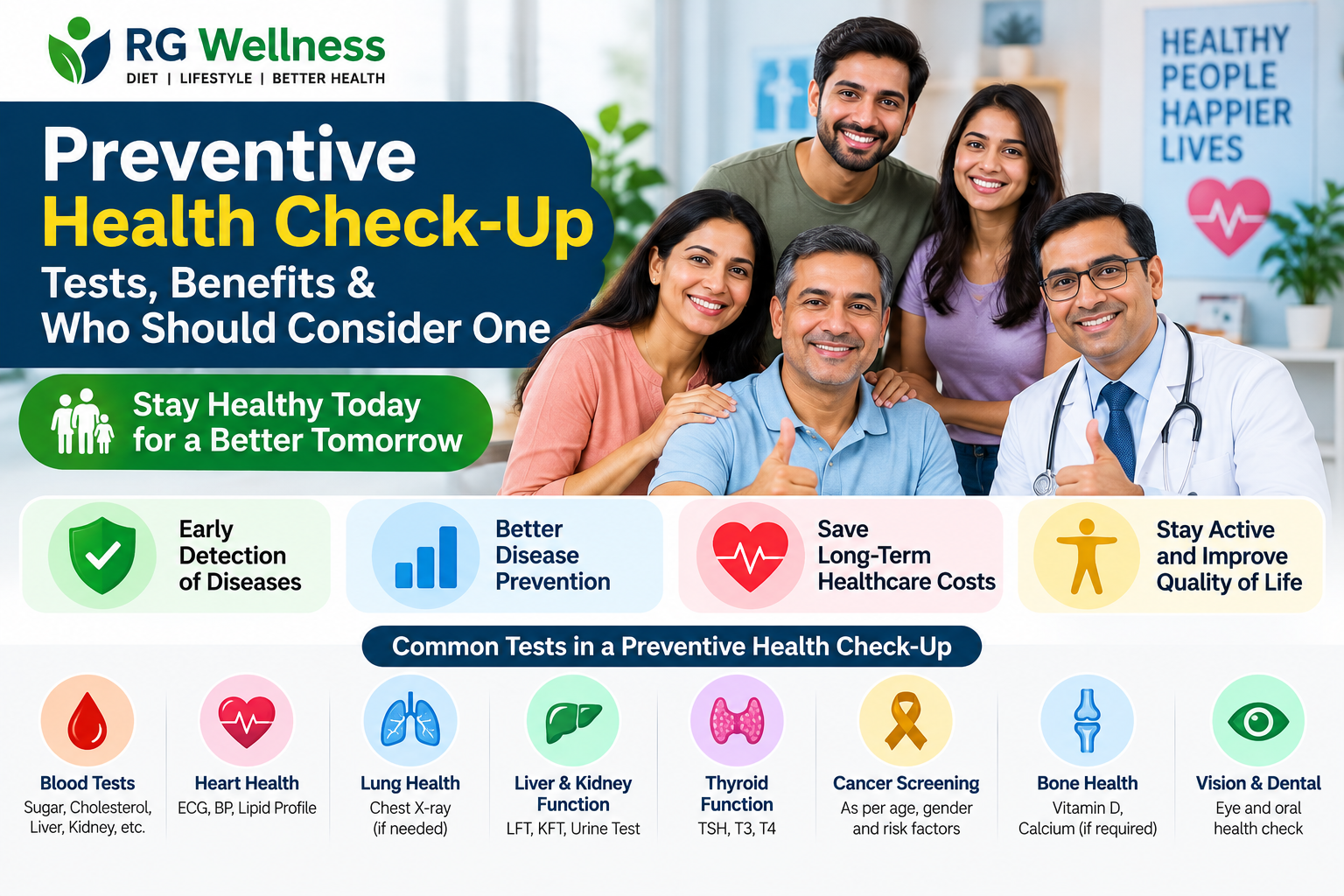

A preventive health check-up is not simply a collection of blood tests. The most useful preventive assessment combines age, sex, family history, lifestyle, physical measurements, vaccination status, cardiovascular risk and evidence-based screening.
For adults in India, this approach is particularly relevant because hypertension, diabetes and other non-communicable diseases can remain silent for years. India’s National Programme for Prevention and Control of Non-Communicable Diseases (NP-NCD) uses 30 years and above as the target age for population-based screening for hypertension, diabetes and oral cancer, with breast and cervical cancer screening for eligible women. National Health Mission
At the same time, evidence does not support performing an indiscriminate “full-body” panel of dozens of tests in every healthy person. A 2026 systematic review of 56 studies involving more than 17 million participants found that general health checks increased detection of chronic disease and uptake of preventive services, but randomized trials generally did not demonstrate reductions in overall mortality or cardiovascular events. The authors concluded that a one-size-fits-all approach is not supported and suggested greater emphasis on risk-stratified preventive care. PubMed
What Is a Preventive Health Check-Up?
A preventive health check-up is a structured assessment intended to identify:
- Risk factors for cardiovascular disease
- Hypertension
- Prediabetes and diabetes
- Dyslipidemia
- Obesity and central adiposity
- Kidney and liver disease when clinically relevant
- Appropriate cancer-screening needs
- Tobacco and alcohol-related risks
- Lifestyle-related health risks
- Vaccination gaps
- Other age- and risk-specific health concerns
It is important to distinguish three concepts:
Preventive care: The overall process of reducing future disease risk.
Screening: Testing people who do not have symptoms to identify disease or precancerous conditions at an appropriate stage.
Diagnostic testing: Investigating symptoms or an abnormal finding.
A person with chest pain, unexplained weight loss or blood in the stool does not need to wait for a routine health package; they need appropriate diagnostic evaluation.
Do Healthy People Need a Full-Body Health Check-Up Every Year?
Not necessarily.
The 2019 Cochrane review included 17 randomized trials involving 251,891 participants. It found little or no effect of general health checks on overall mortality, cancer mortality or cardiovascular mortality, although health checks increased the number of diagnoses. PubMed
The updated 2026 systematic review similarly found that general health checks may improve detection of chronic disease, preventive-service uptake and some risk factors, but did not establish a substantial reduction in mortality or cardiovascular events in the general population. PubMed
This does not mean preventive medicine is unnecessary.
It means that prevention should be targeted.
The objective is not to perform the maximum number of tests. The objective is to perform the tests that have a reasonable chance of detecting an important condition and changing management.
An Indian review in the National Medical Journal of India also cautioned that commercial health-check packages may contain both appropriate and unnecessary tests. Inappropriate screening can result in false-positive results, overdiagnosis, unnecessary follow-up procedures, psychological distress, financial burden and false reassurance. PubMed
Age-Wise Preventive Health Check-Up: Which Tests Should Be Considered?
The following table is a practical risk-based framework, not a requirement that every person undergo every test.
| Age | Core preventive assessment | Tests that may be considered | Important additional screening |
|---|---|---|---|
| 18–29 years | BP, height, weight, BMI, lifestyle, tobacco/alcohol exposure, family history, vaccination review | Glucose/HbA1c, lipid profile or other tests when risk factors are present | Risk-based sexual/reproductive health and mental-health assessment |
| 30–39 years | BP, BMI/waist, family history, lifestyle and cardiovascular risk | HbA1c/fasting glucose, lipid profile; kidney/liver tests when indicated | In India, NP-NCD screening includes hypertension, diabetes and oral cancer from age 30 |
| 40–49 years | BP, BMI/waist, diabetes and cardiovascular-risk assessment | HbA1c/fasting glucose, lipid profile, creatinine/eGFR when indicated | Begin/continue age-appropriate cancer screening |
| 50–59 years | Comprehensive cardiovascular/metabolic assessment | Glucose/HbA1c, lipid profile, kidney assessment; other tests according to risk | Colorectal and other age/risk-based cancer screening; sex-specific screening |
| 60–69 years | Cardiometabolic assessment, medication review, vaccination review | Glucose, lipids, kidney function and other tests according to clinical status | Cancer screening, vision/hearing, functional and falls assessment |
| 70+ years | Individualized health and functional assessment | Tests based on comorbidities, symptoms and treatment decisions | Cancer screening should consider health status, previous screening and life expectancy |
Important
Age alone does not determine every test. Family history, tobacco exposure, obesity, diabetes, hypertension, previous abnormal results and other risk factors can justify earlier or more frequent assessment.
India’s NP-NCD programme specifically targets adults 30 years and older for population-based screening of hypertension, diabetes and oral cancer; women aged 30 years and older are also included for breast and cervical cancer screening. National Health Mission
1. Blood Pressure: One of the Most Important Screening Tests
Blood pressure measurement should be part of adult preventive care.
Hypertension can remain asymptomatic while increasing the risk of:
- Stroke
- Heart attack
- Heart failure
- Chronic kidney disease
The USPSTF recommends screening adults aged 18 years or older for hypertension. When an elevated office reading is obtained, blood pressure should generally be confirmed outside the clinical setting before initiating treatment in appropriate patients. U.S. Preventive Services Task Force
Practical approach
A preventive assessment should include:
- Correctly measured office BP
- Repeat measurement if elevated
- Home BP monitoring or ambulatory BP monitoring when appropriate
- Assessment of overall cardiovascular risk
For India, hypertension screening is especially important because it is incorporated into the country’s population-based NCD screening strategy from age 30. National Health Mission
2. Diabetes and Prediabetes Screening
Type 2 diabetes can remain undiagnosed for years.
Screening may use:
- Fasting plasma glucose
- HbA1c
- Oral glucose tolerance test, when clinically appropriate
The USPSTF recommends screening adults aged 35–70 years with overweight or obesity for prediabetes and type 2 diabetes. It also notes that screening can be considered earlier in populations with higher diabetes risk and at lower BMI thresholds in Asian populations. U.S. Preventive Services Task Force
For Indian adults, earlier risk-based screening is often clinically relevant because of the high burden of type 2 diabetes.
Earlier screening may be appropriate with:
- Family history of diabetes
- Overweight/obesity or central adiposity
- Hypertension
- Dyslipidemia
- Previous prediabetes
- History of gestational diabetes
- PCOS
- Physical inactivity
3. Lipid Profile
A lipid profile generally includes:
- Total cholesterol
- LDL cholesterol
- HDL cholesterol
- Triglycerides
The important point is that cholesterol should not be interpreted in isolation.
A person’s cardiovascular prevention strategy depends on overall risk, including:
- Age
- Blood pressure
- Diabetes
- Smoking
- LDL cholesterol
- Family history
- Kidney disease
- Previous cardiovascular disease
- Other risk-enhancing factors
Therefore, the purpose of lipid testing is not merely to label a result “normal” or “abnormal.”
4. Weight, BMI and Waist Circumference
A preventive assessment should record:
- Height
- Weight
- BMI
- Waist circumference
- Weight trend
Central adiposity is particularly relevant to metabolic risk.
For South Asian populations, metabolic abnormalities may occur at lower BMI levels than in many Western populations. Therefore, BMI should be interpreted alongside waist circumference and other metabolic risk factors.
5. Kidney Health
Early kidney disease may be asymptomatic.
Depending on the person’s risk profile, assessment may include:
- Serum creatinine
- eGFR
- Urinalysis
- Urine albumin-to-creatinine ratio (UACR)
Kidney assessment is particularly important in people with:
- Diabetes
- Hypertension
- Cardiovascular disease
- Previous kidney disease
- Family history of kidney disease
- Persistent urinary abnormalities
The test should be selected according to the clinical question rather than automatically included in every health package.
6. Liver Health
Liver testing may be appropriate when there is a risk of metabolic or other liver disease.
Possible tests include:
- ALT
- AST
- Bilirubin
- ALP
- GGT
- Albumin
Consider targeted assessment in people with:
- Obesity
- Diabetes
- Metabolic syndrome
- Suspected fatty liver
- Alcohol exposure
- Viral hepatitis risk
- Abnormal liver enzymes
- Relevant medication exposure
7. Cancer Screening
Cancer screening should be age- and risk-specific.
There is no single blood test that screens effectively for every cancer.
Breast cancer
For women at average risk, the current USPSTF recommendation is mammography every two years from age 40 through 74 years. PubMed
Women with strong family history or hereditary cancer risk may need a different strategy.
Cervical cancer
For average-risk women, cervical screening is recommended within defined age ranges using appropriate HPV and/or cytology-based strategies.
The USPSTF recommends screening women aged 21–65 years, with the method and interval depending on age. U.S. Preventive Services Task Force
Local Indian screening protocols should also be considered.
Colorectal cancer
The USPSTF recommends colorectal cancer screening for average-risk adults beginning at 45 years and continuing through 75 years. Adults aged 76–85 years may be considered selectively based on overall health, previous screening and preferences. U.S. Preventive Services Task Force
Screening options include stool-based testing and direct visualization methods such as colonoscopy.
Lung cancer
Lung cancer screening is not appropriate for every smoker or every adult.
USPSTF criteria include:
- Age 50–80 years
- At least 20 pack-years of smoking history
- Currently smoking or having quit within the previous 15 years
Eligible individuals are screened with annual low-dose CT. U.S. Preventive Services Task Force
Oral cancer
Oral cancer prevention is particularly relevant in India because of tobacco and smokeless-tobacco exposure.
India’s NP-NCD programme includes oral-cancer screening for adults aged 30 years and above. National Health Mission
People using tobacco products should receive tobacco-cessation counselling and clinical oral examination when appropriate.
8. Complete Blood Count
A CBC can help identify:
- Anemia
- Abnormal white-cell counts
- Platelet abnormalities
However, routine annual CBC testing for every asymptomatic adult is not automatically required.
It becomes more useful when there are:
- Symptoms
- Nutritional concerns
- Suspected anemia
- Bleeding
- Chronic disease
- Relevant medication exposure
- Previous abnormal CBC
9. Thyroid Testing
TSH is frequently included in commercial health packages.
However, routine annual thyroid testing is not automatically necessary for every asymptomatic adult.
Testing is more appropriate when there are:
- Symptoms suggestive of thyroid disease
- Goiter
- Previous thyroid disease
- Relevant medications
- Pregnancy or pregnancy planning
- Specific clinical risk factors
10. Vitamin D and Vitamin B12
These tests should also be individualized.
Testing may be useful in selected people with:
- Previous deficiency
- Restricted diets
- Malabsorption
- Neurological symptoms
- Certain medications
- Bone-health concerns
- Other specific risk factors
Routine testing of every healthy adult is not necessarily evidence-based.
Tests That Should Not Automatically Be Included in Every Health Package
A large test package can create the impression of comprehensive care, but more tests do not necessarily mean better preventive medicine.
Depending on the individual, routine indiscriminate testing may include:
- Tumor-marker panels
- Whole-body CT
- Whole-body MRI
- Routine carotid Doppler
- Routine cardiac stress testing
- Routine echocardiography
- Extensive autoimmune antibody panels
- Large hormone panels
- Repeated vitamin testing
- Multiple cancer markers
These investigations may have legitimate diagnostic indications, but they should not automatically be presented as universal screening tests for asymptomatic people.
The Indian literature specifically highlights the potential harms of inappropriate screening, including false-positive results, overdiagnosis, unnecessary investigations and financial burden. PubMed
Preventive Health Check-Up: Core Tests vs Risk-Based Tests
| Category | Commonly useful preventive assessment | When additional testing may be needed |
|---|---|---|
| Blood pressure | BP measurement | Home BP/ABPM if elevated or uncertain |
| Diabetes | HbA1c or fasting glucose according to risk | OGTT or repeat testing when clinically indicated |
| Lipids | Lipid profile | More detailed assessment according to cardiovascular risk |
| Kidney | Creatinine/eGFR in appropriate risk groups | UACR, urinalysis, imaging when indicated |
| Liver | Liver enzymes when clinically appropriate | Imaging/additional tests for suspected disease |
| Blood count | CBC when indicated | Further hematological investigation if abnormal |
| Thyroid | TSH when indicated | FT4/other tests depending on result |
| Cancer | Age/sex/risk-specific screening | Earlier or intensified screening for high-risk individuals |
| Lifestyle | Diet, exercise, tobacco, alcohol, sleep | Structured intervention when risk identified |
| Vaccination | Review immunization status | Age- and risk-specific vaccines |
Who Should Consider a Preventive Health Check-Up?
Young adults: 18–29 years
The focus should generally be:
- Blood pressure
- Weight and BMI
- Lifestyle
- Tobacco exposure
- Alcohol exposure
- Family history
- Vaccination status
- Mental and reproductive health where relevant
Laboratory testing should be risk-based rather than automatically extensive.
Adults: 30–39 years
This is an important period for establishing cardiometabolic risk.
Consider:
- BP
- BMI and waist circumference
- Diabetes risk
- HbA1c/fasting glucose where appropriate
- Lipid profile
- Family history
- Tobacco exposure
- Physical activity
- Diet
In India, population-based NCD screening begins at age 30. National Health Mission
Adults: 40–49 years
Preventive assessment should become more structured.
Consider:
- BP
- Diabetes screening
- Lipid profile
- BMI/waist
- Cardiovascular risk assessment
- Kidney assessment when indicated
- Appropriate cancer screening
Adults: 50–59 years
This age group generally benefits from a more comprehensive preventive review.
Consider:
- BP
- HbA1c/fasting glucose
- Lipid profile
- Kidney assessment
- Cardiovascular risk
- Age-appropriate cancer screening
- Tobacco assessment
- Vaccination review
Adults: 60–69 years
In addition to cardiometabolic screening:
- Medication review
- Vaccination review
- Vision and hearing
- Functional status
- Falls risk
- Cancer screening
- Kidney function when appropriate
- Lifestyle and nutrition
Adults aged 70 years and older
Screening should become increasingly individualized.
The emphasis should be on:
- Functional health
- Existing diseases
- Medication burden
- Mobility
- Falls
- Cognitive concerns
- Nutrition
- Vaccination
- Appropriate cancer screening
Not every screening test that is appropriate at 50 or 60 remains appropriate indefinitely.
How Often Should Preventive Screening Be Done?
There is no universal “one health check every year” rule.
Different assessments have different intervals.
For example, India’s NP-NCD population-based screening guidance states that hypertension and diabetes screening should be conducted annually within its programme, while common cancer screening is undertaken at longer intervals. National Health Mission
For an individual patient, the interval should depend on:
- Age
- Previous results
- Risk factors
- Existing disease
- Family history
- Medication
- Previous screening
- Lifestyle
A person with hypertension, diabetes or abnormal cholesterol may need substantially more frequent clinical follow-up than a healthy low-risk adult.
Preventive Check-Up vs “Full-Body Package”
| Evidence-based preventive care | Indiscriminate testing |
|---|---|
| Based on age and risk | Same tests for everyone |
| Uses validated screening tests | May include low-value tests |
| Considers family history | Often ignores family history |
| Includes lifestyle assessment | Often focuses mainly on laboratory values |
| Results are clinically interpreted | Abnormal results may create anxiety |
| Has a follow-up plan | Follow-up may be unclear |
| Focuses on prevention and outcomes | Often focuses on number of tests |
When Should You See a Doctor Instead of Booking a Routine Check-Up?
A preventive check-up is intended primarily for people without concerning symptoms.
Do not wait for a routine package if you develop:
- Chest pain
- Significant breathlessness
- Fainting
- New neurological symptoms
- Persistent unexplained fever
- Unexplained weight loss
- Blood in stool or urine
- Persistent cough
- Abnormal bleeding
- A new lump
- Persistent abdominal pain
- Significant or progressive weakness
These situations require clinical assessment and diagnostic investigation, not simply routine screening.
The Most Useful Preventive Health Strategy
A high-quality preventive consultation should follow a sequence:
1. Assess risk
Age + sex + family history + lifestyle + previous disease.
2. Measure
BP + weight + BMI + waist circumference and other relevant clinical measurements.
3. Screen
Use evidence-based tests appropriate for age and risk.
4. Interpret
An abnormal laboratory value should be interpreted in the clinical context.
5. Act
Provide appropriate:
- Lifestyle intervention
- Vaccination
- Treatment where indicated
- Further investigation
- Specialist referral when necessary
6. Follow up
Screening is useful only when abnormal findings receive appropriate follow-up.
Key Takeaway
Preventive health check-up does not mean testing everything.
For most adults, the foundation should be:
Blood pressure + metabolic risk assessment + appropriate glucose testing + cardiovascular risk assessment + age/sex-specific cancer screening + lifestyle assessment + vaccination review.
Additional tests should be selected according to the person’s individual risk.
For Indian adults, particular attention should be given to hypertension, diabetes, cardiovascular risk, obesity/central adiposity and tobacco-related disease, with the Government of India’s NP-NCD programme targeting adults aged 30 years and above for population-based screening for hypertension, diabetes and oral cancer. National Health Mission
The best preventive health check-up is not the one with the largest number of tests. It is the one that identifies meaningful health risks early, leads to appropriate action, and avoids unnecessary investigations.
Evidence and References
- Wang Y, et al. Effectiveness and cost-effectiveness of general health checks in adults: A systematic review. BMC Public Health. 2026. PMID: 42414985. PubMed
- Krogsbøll LT, Jørgensen KJ, Gøtzsche PC. General health checks in adults for reducing morbidity and mortality from disease. Cochrane Database Syst Rev. 2019;1:CD009009. PMID: 30699470. PubMed
- Honnekeri B, et al. Routine health check-ups: A boon or a burden? National Medical Journal of India. 2016. PMID: 27492031. PubMed
- U.S. Preventive Services Task Force. Hypertension in Adults: Screening. U.S. Preventive Services Task Force
- U.S. Preventive Services Task Force. Prediabetes and Type 2 Diabetes: Screening. U.S. Preventive Services Task Force
- U.S. Preventive Services Task Force. Colorectal Cancer: Screening. U.S. Preventive Services Task Force
- U.S. Preventive Services Task Force. Cervical Cancer: Screening. U.S. Preventive Services Task Force
- Government of India, National Health Mission. Population-Based Screening under NP-NCD. National Health Mission
Medical disclaimer:
This article is intended for general health education and does not replace individualized medical evaluation. Screening recommendations may vary according to individual risk factors, symptoms, family history, previous results and applicable clinical guidelines.