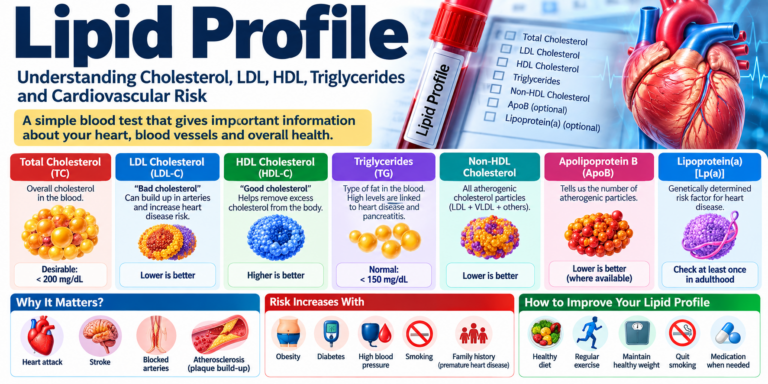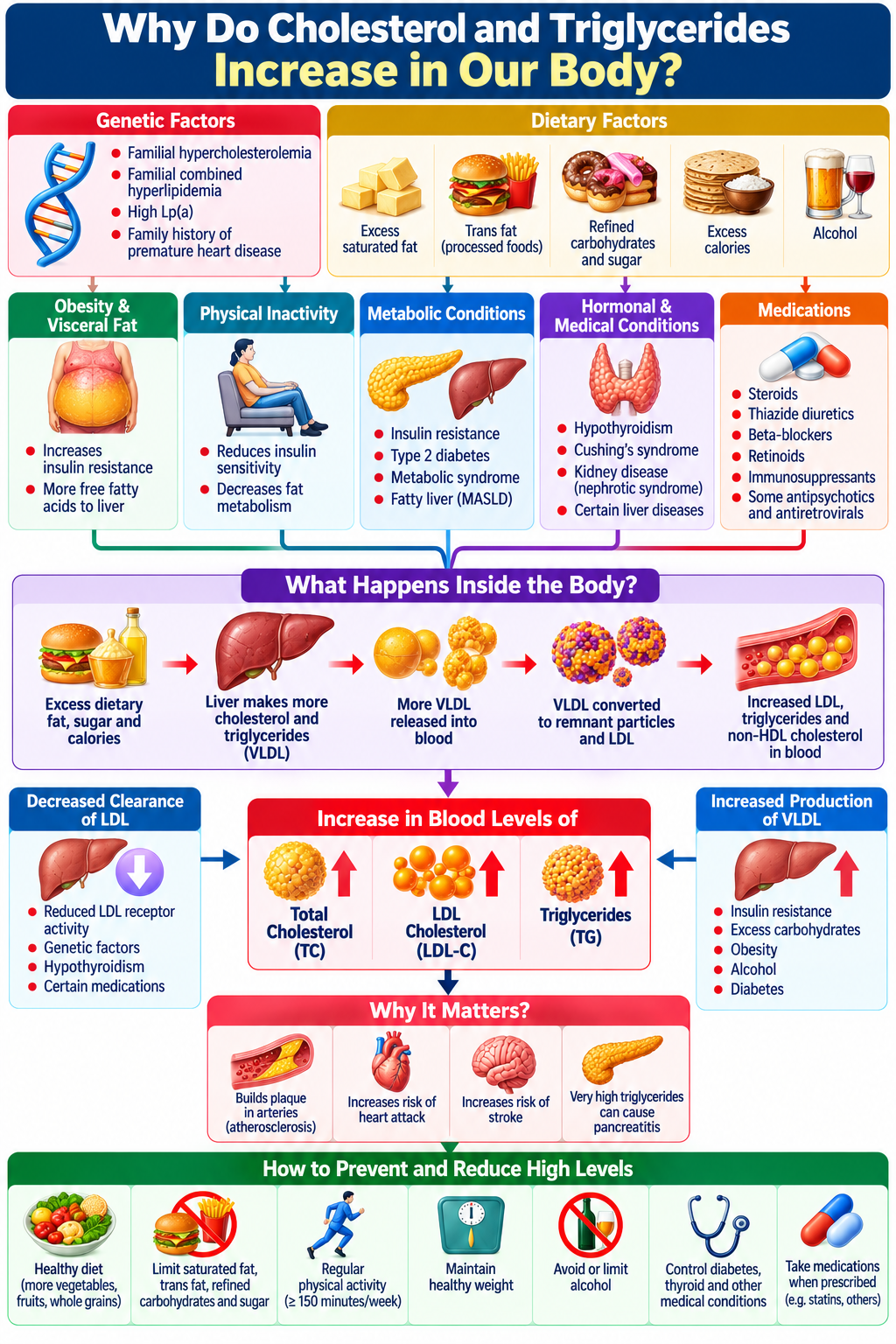

Our body needs cholesterol and triglycerides. The problem occurs when atherogenic lipoproteins—especially LDL and ApoB-containing particles—remain elevated in the blood for a long time.
1. The liver produces too much cholesterol/VLDL
The liver is the central organ controlling lipid metabolism.
Excess:
- Calories
- Refined carbohydrates
- Sugar/fructose
- Alcohol
- Saturated fat
can promote hepatic production of triglyceride-rich VLDL particles.
These particles are eventually remodeled into LDL particles.
Excess energy → liver makes more triglyceride → VLDL ↑ → LDL/remnant particles ↑
2. The liver does not remove LDL efficiently
Normally, LDL is removed from the bloodstream mainly through LDL receptors in the liver.
If LDL-receptor activity is reduced:
LDL remains in circulation longer → LDL-C rises → ApoB-containing particles accumulate.
This can occur because of:
- Genetic factors
- Familial hypercholesterolemia
- Hypothyroidism
- Certain metabolic conditions
- Some medications
This is one reason genetics can produce high cholesterol even in a person who eats a healthy diet.
3. Insulin resistance
This is one of the most important causes of an abnormal lipid profile.
With insulin resistance:
Insulin resistance → increased free fatty acid delivery to liver → increased VLDL production → triglycerides ↑
It can also produce the typical metabolic pattern:
TG ↑ + HDL ↓ + small dense LDL ↑
This pattern is commonly seen with:
- Abdominal obesity
- Prediabetes
- Type 2 diabetes
- Metabolic syndrome
- MASLD/fatty liver
4. Excess refined carbohydrates and sugar
Large amounts of:
- Sugar
- Sweetened beverages
- Sweets
- Refined flour
- White rice in excessive portions
- Bakery foods
can increase hepatic de-novo lipogenesis in susceptible individuals.
This particularly tends to increase:
Triglycerides → VLDL → remnant particles
rather than simply increasing LDL in every person.
5. Saturated and trans fats
Dietary saturated fat can increase LDL-C in many individuals, partly by affecting hepatic LDL-receptor activity.
Important sources include:
- Ghee/butter in excess
- Fatty meats
- High-fat dairy
- Bakery products
- Fried/processed foods
Trans fats are particularly unfavorable and should be minimized.
6. Obesity and excess visceral fat
Visceral adipose tissue is metabolically active.
Excess visceral fat can cause:
Insulin resistance → increased fatty-acid flux to liver → VLDL/TG ↑ → metabolic dyslipidemia
This is why weight management can substantially improve triglycerides and overall metabolic health in appropriate patients.
7. Physical inactivity
Regular physical activity improves:
- Insulin sensitivity
- Triglyceride clearance
- HDL metabolism
- Overall metabolic health
Sedentary behavior can therefore contribute to an unfavorable lipid pattern.
8. Genetics
This is very important, particularly in young patients.
Examples include:
- Familial hypercholesterolemia
- Familial combined hyperlipidemia
- Familial hypertriglyceridemia
- Elevated Lp(a)
A patient can have high LDL despite an apparently excellent diet and normal body weight.
A strong family history of premature heart attack or stroke should therefore raise suspicion of inherited dyslipidemia.
9. Hypothyroidism
Low thyroid hormone can reduce LDL clearance.
Therefore:
Unexpectedly high LDL-C → consider checking TSH when clinically appropriate.
10. Diabetes and metabolic syndrome
Poor glycemic control and insulin resistance can cause:
Triglycerides ↑
HDL ↓
ApoB/remnant particles ↑
This is a very common pattern in clinical practice.
11. Kidney and liver disorders
Some disorders can significantly alter lipid metabolism, including:
- Chronic kidney disease
- Nephrotic syndrome
- Certain cholestatic liver diseases
- Metabolic liver disease
Therefore, dyslipidemia should sometimes be regarded as a marker of an underlying metabolic or systemic disorder, not merely a dietary problem.
12. Alcohol
Alcohol can markedly increase triglycerides in susceptible individuals, particularly when intake is high.
In someone with TG ≥500 mg/dL, alcohol avoidance becomes particularly important because very high triglycerides increase the risk of acute pancreatitis.
13. Certain medications
Depending on the drug, medications can increase LDL or triglycerides.
Examples include some:
- Steroids
- Thiazide diuretics
- Beta-blockers
- Retinoids
- Immunosuppressive drugs
- Antiretroviral therapies
- Some antipsychotic medications
Medication history should therefore be reviewed when dyslipidemia develops unexpectedly.
The Most Important Concept
Think of lipid metabolism as a balance:
Dietary absorption
↓
Liver production
↓
VLDL → remnants → LDL
↓
LDL clearance by liver
If production increases or clearance decreases, blood lipid levels rise.
In simple terms:
Too much production + too little clearance = dyslipidemia
And for cardiovascular disease, the most important issue is not simply “high cholesterol,” but long-term exposure to ApoB-containing atherogenic particles.
Therefore, when you see a high lipid profile, ask:
1. LDL high? → genetic factors, saturated fat, hypothyroidism, etc.
2. TG high? → insulin resistance, diabetes, refined carbohydrates, alcohol, obesity, drugs.
3. HDL low? → metabolic dysfunction, obesity, insulin resistance, inactivity.
4. ApoB high? → increased atherogenic particle burden.
5. Lp(a) high? → largely genetically determined cardiovascular risk.
6. Young patient? → think particularly about familial dyslipidemia and family history.